
Timeline: History
Film: 'From fireside chats to key decision-maker'
This documentary traces the history of the European Council from its foundation down to the present day. It shows important milestones from the last decades that have shaped the way EU leaders make decisions.
The story is told through the eyes of those who witnessed the European Council's transformation to the decision-making centre that it is today.
Find out more about the events and treaties which have shaped the roles of the European Council, the Council of the EU, the Eurogroup and the Euro Summit.
-
1997
13 DecemberCreation of the Eurogroup
The European Council endorses the creation of the Eurogroup, an informal body that brings together the finance ministers of countries whose currency is the euro. The first Eurogroup meeting is held on 4 June 1998 at the Chateau de Senningen in Luxembourg.
-
1999
1 JanuaryThe euro is born as a virtual currency
It is introduced in 11 member states: Austria, Belgium, Finland, France, Germany, Ireland, Italy, Luxembourg, Netherlands, Portugal and Spain.
-
2001
1 JanuaryGreece joins the euro area
Greece becomes the 12th EU member state to join the euro area.
-
2002
1 JanuaryThe euro enters circulation
On 1 January 2002 the euro starts circulation as banknotes and coins, replacing national currencies.

-
2003
1 FebruaryTreaty of Nice
The Treaty of Nice introduces the reform of EU institutions, in preparation for a future enlarged EU of 27 member states. The Council is reformed to extend the use of qualified majority voting, and to introduce the principle of enhanced cooperation between member states.
-
2004
10 SeptemberFirst permanent President of the Eurogroup
The Eurogroup decides to have a permanent president, appointed for a period of two years.
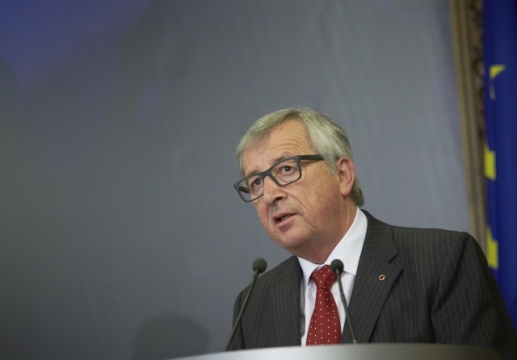
At an informal Economic and Financial Affairs Council (ECOFIN) meeting in Scheveningen, Jean-Claude Juncker is elected as the first permanent President of the Eurogroup. His term runs from 1 January 2005 until 31 December 2006.
-
2006
1 SeptemberJean-Claude Juncker is reappointed as President of the Eurogroup
He is elected as President of the Eurogroup for a second term.
-
2007
1 JanuarySlovenia joins the euro area
Slovenia becomes the 13th EU member state to adopt the euro as its currency.
-
2008
1 JanuaryCyprus and Malta join the euro area
There are now 15 members of the euro area.
-
2008
12 OctoberThe Euro Summit is born
The French President, Nicolas Sarkozy, proposes a regular meeting of the euro area heads of state or government. The first meeting takes place on 12 October 2008. Subsequent summits take place in May 2010, March 2011, July 2011, and October 2011 in Brussels.
Euro Summit meetings help to coordinate euro area economic policy and are also attended by the Euro Summit President and the President of the European Commission.
-
2009
1 JanuarySlovakia joins the euro area
Slovakia becomes the 16th member of the euro area.
-
2009
1 DecemberProtocol 14 to the Lisbon Treaty
Protocol 14 to the Lisbon Treaty enters into force on 1 December 2009, setting out the role of the Eurogroup. Ministers of the member states with the euro will meet informally to discuss matters related to the single currency and they will elect a president for two and a half years.
The Lisbon Treaty also amends the Council of the EU's rules so that when the full Economic and Financial Affairs Council (Ecofin) votes on matters only affecting the euro area, only Eurogroup members are allowed to vote.
-
2011
1 JanuaryEstonia joins the euro area
Estonia becomes the 17th country to join the euro area.
-
2013
21 JanuaryElection of the Eurogroup President
Jeroen Dijsselbloem, Dutch Finance Minister, is elected President of the Eurogroup. He becomes the second permanent Eurogroup President in the history of the Eurogroup.

-
2014
1 JanuaryLatvia joins the euro area
Latvia becomes the 18th member of the euro area.
-
2015
1 JanuaryLithuania joins the euro area
The euro area now has 19 members: Austria, Belgium, Cyprus, Estonia, Finland, France, Germany, Greece, Ireland, Italy, Latvia, Lithuania, Luxembourg, Malta, Netherlands, Portugal, Slovakia, Slovenia and Spain.

-
2015
13 JulyJeroen Dijsselbloem elected Eurogroup president for a second term
Jeroen Dijsselbloem is re-appointed as Eurogroup President for a second term of 2.5 years.

-
2017
4 DecemberElection of the Eurogroup President
Mário Centeno, Portuguese Finance Minister, is elected President of the Eurogroup. He becomes the third permanent Eurogroup President in the history of the Eurogroup.

-
2020
9 JulyPaschal Donohoe elected Eurogroup President
The Eurogroup elected Paschal Donohoe, Minister for Finance and Public Expenditure and Reform of Ireland, as President of the Eurogroup, in line with Protocol 14 of the EU treaties.
The new president takes office as of 13 July 2020 for two and a half year term.

-
2022
5 DecemberPaschal Donohoe reelected Eurogroup President
The Eurogroup reelected by consensus Paschal Donohoe, Minister for Finance of Ireland, as President of the Eurogroup, for a second term of two and a half years that started from 13 January 2023.
-
2023
1 JanuaryCroatia joins the euro area
Croatia becomes the 20th member of the euro area.

First Eurogroup meeting with Croatia in January 2023 -
2025
7 JulyPaschal Donohoe confirmed for a third term as Eurogroup President
The Eurogroup has re-elected Paschal Donohoe, Ireland’s Minister for Finance, as its President by consensus. In office since 13 July 2020, he will begin his third term on 13 July 2025. The mandate will run for two and a half years.
-
2025
18 NovemberMakis Keravnos serves as acting Eurogroup President
On 18 November 2025, Makis Keravnos, Minister of Finance of the Republic of Cyprus, became acting President of the Eurogroup following the resignation of Paschal Donohoe, the previous president. In keeping with the Eurogroup’s working methods, he will serve in this role until a new president is selected.
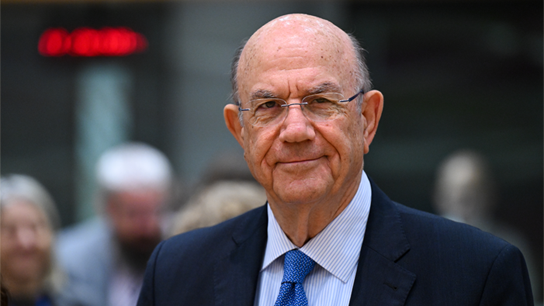
Makis Keravnos, acting President of the Eurogroup -
2025
11 DecemberKyriakos Pierrakakis elected Eurogroup President
The Eurogroup has elected Kyriakos Pierrakakis, Minister of Economy and Finance of Greece, as President of the Eurogroup, in line with Protocol 14 of the EU treaties.
The new president will take up office on 12 December 2025 and serve a two-and-a-half year term.

-
2026
1 JanuaryBulgaria joins the euro area
Bulgaria becomes the 21st member of the euro area.

Bulgaria joining euro area ceremony
Last review: 29 May 2026