- Blog post
- 9 giugno 2016
Training Seminar for European Documentation Centres
Representatives of the European Documentation Centres (EDCs) from the Member States made their way to Brussels for a training seminar on 2 and 3 June 2016 which provided the EDCs with practical input for their work on the ground. The event was organised by the Directorate-General for Communication of the Commission (DG COMM).

The General Secretariat of the Council (GSC) participated in the information sessions on 'Access to EU documentation', which covered the following topics:
- the library resources in the GSC;
- access to Council documents;
- archival access and online archives of the GSC.
The library identifies and disseminates all the information materials needed to support the work of Council staff and other stakeholders. The library team also emphasised that it identifies and makes available digital resources, such as databases, dictionaries, e-books, and e-journals. All library materials can be found through the online catalogue.
The team monitors scholarly journals, think tank publications and conferences, and has established a network with the academic community. In this context, the library is responsible for a monthly selection of EU-related papers published by 270 think tanks across the world - the Think Tank Review. The library team also runs a blog which presents EU-related event reports, reading suggestions and library notes.
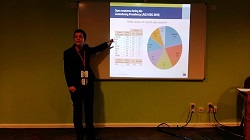
As regards access to Council documents, details were provided on how to browse through the Council's website for information on Council activities and how to search for documents in the Council's public register.
With respect to archival access and online archives of the GSC, we explained that our mission was to provide the institutional memory of the European Council and the Council of the European Union, as well as to advise the various Directorates-General of the GSC on good practices regarding records management.
An appropriate storage system and optimised capacity are key to finding information. All documents produced or received by the Council and the European Council are archived in accordance with their activities.
The European Documentation Centre network was set up by the European Commission in 1963. The purpose of this network is to serve the reference needs of researchers, students and citizens. EDCs are therefore contractually entitled to receive, free of charge, most publications of the institutions. Currently there are 376 EDCs in 27 Member States (none in Luxembourg). The main tasks of the EDCs are to:
- promote and consolidate teaching and research in the field of European integration;
- make in-depth information and sources on the European Union and its policies available to the public, especially in the academic and university environment;
- participate in the debate on the European Union, when appropriate with other European information outlets and networks.
The EDCs' role as an educational and communication resource is crucial in reducing the gap between the EU and its citizens, some of whom have lost their trust in the EU in recent years. By virtue of their experience and their well-functioning network, EDCs are excellent points of contact where information about the EU can be accessed through modern technology, including databases.
Background
- web page of the library
- Access the Think Tank Review (TTR)
- Council public register
- Council archives
- European Documentation Centre network