Forests: facts and figures
Forests offer a wide range of benefits for human health and the environment, but are under increasing strain. Several EU initiatives and laws support forests, both within the European Union and worldwide.
What forests provide
Forests are vital for human health and well-being, for the environment and for the climate.
Carbon storage
Every year, EU forests capture around 10% of the EU's greenhouse gas emissions – in trees, plants and soil. That makes them by far the biggest carbon sink in the EU.

Clean water and air
Forests are natural purifiers for air and act as natural filters, capturing rainwater and allowing it to seep through the soil and roots.

Wildlife habitat
Forests are havens of biodiversity. Worldwide, they host 80% of all terrestrial species of animals, plants and fungi.

Timber and raw materials
Harvested wood products store carbon and contribute to reducing CO2 emissions. Forests also provide non-wood raw material, such as food, medicinal plants and cork.

Soil and flood protection
The root systems in forests hold the soil in place and prevent erosion. They also help regulate water flows, reduce run-off and lower the risk of floods.

Recreation and health
Forests provide spaces for hiking, camping and connecting with nature, helping us boost our physical and mental health.

Green jobs and employment
4.5 million jobs in the EU depend directly or indirectly on forests. Worldwide, forests provide 86 million green jobs.
Forest land and forest health
In the EU
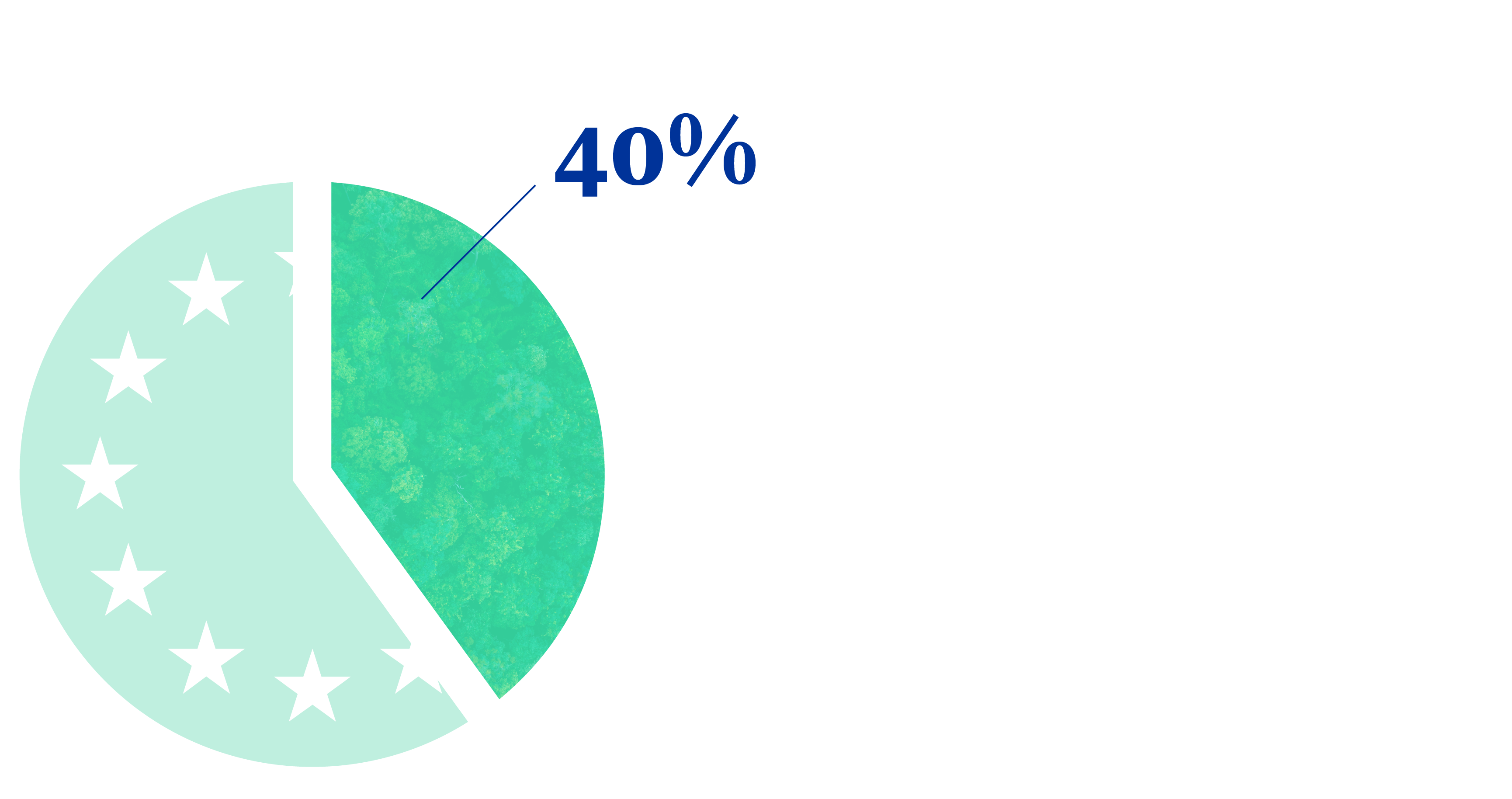
Nearly 40% of EU territory is covered by forests and the area has increased by 5.5% since 2000 thanks to afforestation, sustainable management, active restoration and natural processes.
However, our forests are in a poor condition as their health is deteriorating.
Worldwide
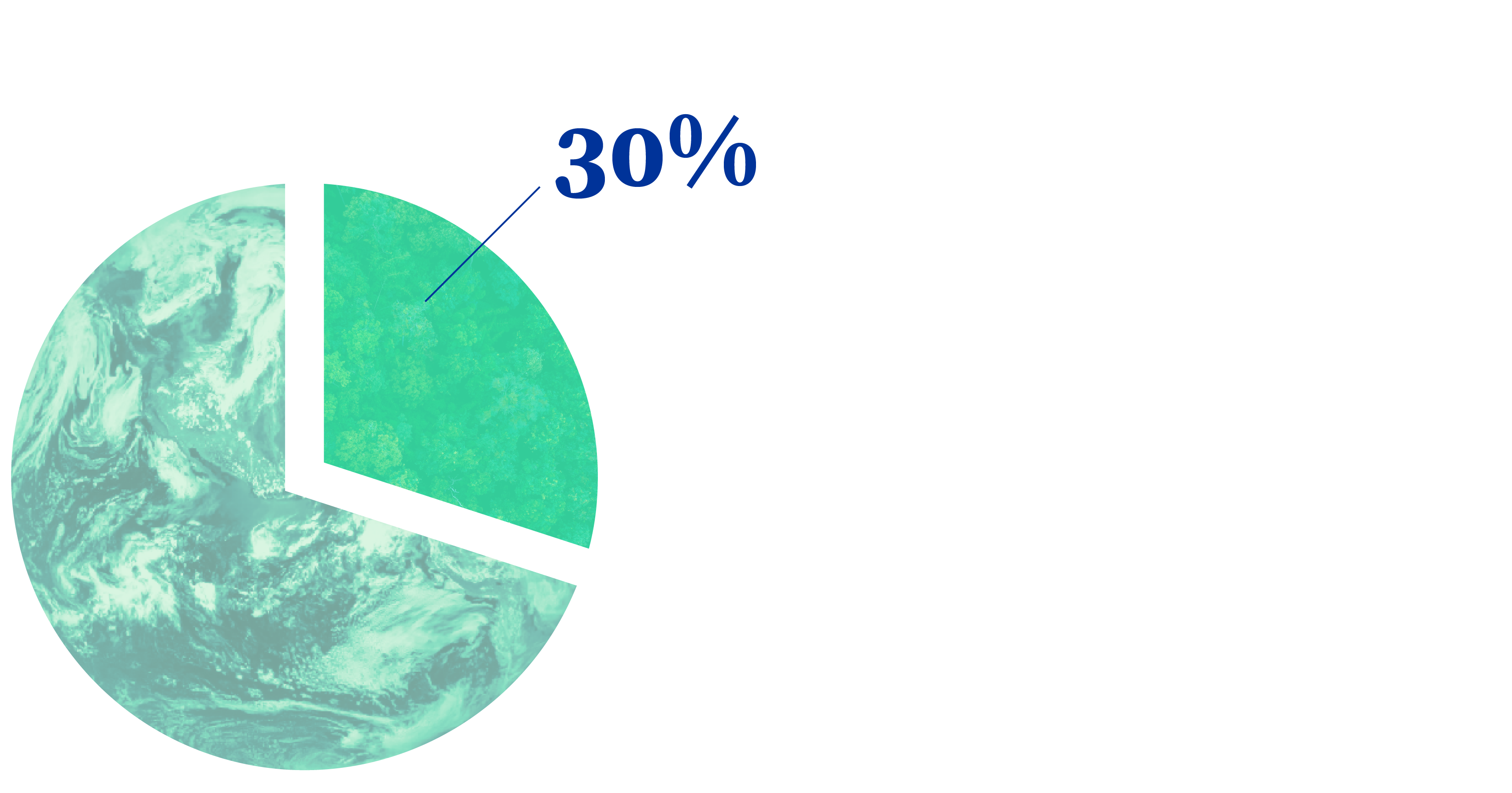
Forests cover around 30% of the Earth's land area. This represents 4.06 billion hectares or about half a hectare of forest for every person on the planet.
Each year, the area decreases by 4.12 million hectares on average. This is more than the size of the Netherlands.
Greenhouse gas storage
The health and resilience of forests, changes in forest ecosystems due to climate change or pests, and increased tree harvesting can all affect forests' ability to absorb and store greenhouse gases. In 2024, EU forests stored 25% less greenhouse gases than in 2000, even though their overall area has increased.
The potential of EU forests to store greenhouse gases is decreasing
The chart shows the annual amount of greenhouse gases absorbed by EU forests, measured in million tonnes CO2 equivalent (MtCO2e).
Line chart showing the annual amount of greenhouse gases absorbed by forest land from 2000 to 2024, measured in million tonnes CO2 equivalent (MtCO2e).
From 2000 to 2015, forest land absorbed around 450 MtCO2e per year, with some fluctuations. After 2015, the absorption level began to decline steadily, with a drop to 362 MtCO2e in 2017 and 306 MtCO2e in 2018. Since then, absorption levels have remained relatively stable at just above 300 MtCO2e.
Threats to forests
Forests increasingly face pressures and risks, making it harder for them to offer the benefits expected of them.
Deforestation and forest degradation have destroyed around 10% of the world's forests over the past 30 years.
In addition, climate change is aggravating:
• biodiversity loss
• pests and diseases such as bark beetle infestations which can damage large areas of forest
• pollution, such as high ozone levels that reduce trees' ability to carry out photosynthesis
• droughts and forest fires, leading to younger forests or reduced growth rates
Forest fires on the rise in the EU
The chart shows the annual number of forest fires in the European Union. In 2022, almost 8 000 fires were recorded, causing a loss of 9 000 km2 of EU forests.
Column chart showing the annual number of forest fires in the European Union from 2010 to 2024.
From 2010 to 2018, the number of fires remained below 1 000 per year, except for a notable increase in 2017, which saw over 1 900 fires. Starting in 2019, the annual number of fires began to rise steadily, reaching a peak of over 7 800 fires in 2022. In 2023 and 2024, the number of fires decreased but remained high, with more than 5 000 fires recorded each year. In 2025, the number of fires fell again to around 2 200.
As a result, the health of the EU forests and their resilience to stress is decreasing. Major fires are also polluting the air and water and in turn contributing to greater global warming.
See also

Forest resilience and protection of forests
EU deforestation-free products regulation

Climate change: what the EU is doing
Last review: 22 September 2026
