We use cookies to improve your browsing experience. Necessary cookies are required to support essential features of the Council's website. Optional cookies help us produce anonymous and aggregated statistical reports to better serve your needs.
Economic and Financial Affairs Council (Budget), 15-18 November 2019
Main results
The Council endorsed an agreement on the 2020 EU budget reached with the European Parliament in the conciliation committee. The budget strongly focuses on growth and competitiveness, climate action and other EU priorities such as security and management of migration.
Total commitments were set at €168.7 billion. This is an increase of 1.5% compared to the 2019 budget as amended. €1.5 billion have been kept available under the expenditure ceilings of the multiannual financial framework for 2014-2020, allowing the EU to react to unforeseeable needs.
Total payments amount to €153.6 billion, rising 3.4% from 2019. This increase reflects the continuing implementation of the 2014-2020 programmes at full speed. The aim is to ensure timely payments to beneficiaries and avoid a substantial accumulation of payment claims over the next few years, in particular in relation to cohesion policy.
The agreed figures are based on the premise that the UK will continue to participate fully in the financing and implementation of the EU budget for 2020.
Next year's budget strengthens support for the EU's priority areas and best-performing programmes. It also ensures a realistic approach, taking into account the interests of taxpayers and the need to cater for new challenges that may arise in 2020. I would like to highlight in particular the move to further "green" the EU budget and ensure that it works in support of the EU's climate agenda.
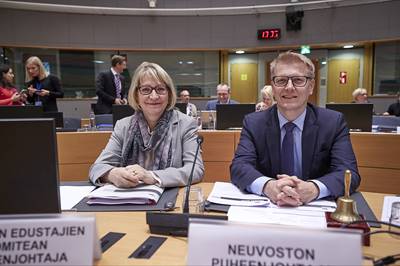
Kimmo Tiilikainen, State Secretary, Ministry of Finance of Finland, chief Council negotiator for the 2020 EU budget
 Next year's budget strengthens support for the EU's priority areas and best-performing programmes. It also ensures a realistic approach, taking into account the interests of taxpayers and the need to cater for new challenges that may arise in 2020. I would like to highlight in particular the move to further "green" the EU budget and ensure that it works in support of the EU's climate agenda.