EU-Australia trade: facts and figures
The European Union and Australia are currently finalising negotiations on a free trade agreement. In 2024, trade in goods and services between the European Union and Australia was worth over €91 billion.
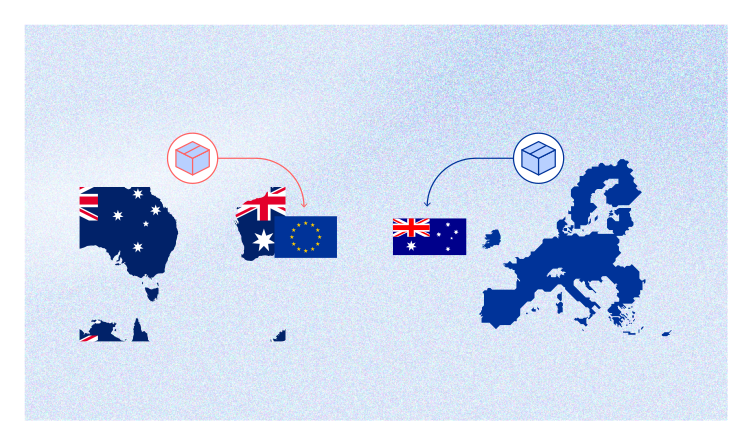
Trade in goods
The EU is Australia's third top trading partner for goods after China and Japan, representing 8.6% of Australia's trade.
In 2025, EU-Australia trade in goods was worth over €47 billion – with €36.9 billion in EU exports to Australia and €10.2 billion in EU imports from Australia.
Over a decade, trade in goods has grown by almost 50%.

€10.2 billion worth of imports from Australia


€36.9 billion worth of exports to Australia
Top traded goods

machinery and appliances

chemicals

mineral products (for EU imports)

transport equipment (for EU exports)
Trade in services
In 2024, EU-Australia trade in services was worth almost €42 billion, with almost 11 billion representing EU imports and around 31 billion EU exports.
Over a decade, EU-Australia trade in services has grown by almost 138%.
€10.9 billion worth of imports from Australia

€31 billion worth of exports to Australia
Top traded services

telecommunications, computer and information services

professional, scientific, and technical services

travel services

transport services
Foreign direct investment
The EU is Australia's second largest source of foreign investment, with investments by EU companies worth over €120 billion in 2024. European investment is particularly present in sectors such as renewables, infrastructure, transport, and advanced manufacturing.
EU-Australia free trade agreement and political cooperation
The EU and Australia have a longstanding cooperation and share fundamental values and principles such as democracy, the rule of law, human rights, good governance and a market-based economy. Since 2022, the EU-Australia relations are currently framed by a political framework agreement, deepening cooperation on foreign policy, trade, sustainable development, climate change and research.
As regards their trade ties, the EU and Australia are currently finalising the negotiations on a free trade agreement. The negotiations have been in place since 2018.
According to the estimations done by the European Commission, once the deal is implemented, trade in goods and services between the two partners could increase by around a third.
The 2022 political framework agreement contains a number of economic and trade cooperation arrangements, such as a mutual recognition agreement to reduce technical barriers to trade in industrial products. It also establishes a trade and investment dialogue to facilitate the removal of non-tariff barriers, enhance transparency and promote bilateral trade and investment flows. Additionally, the agreement includes provisions for cooperation on public procurement, improving access to each other's markets and exchanging best practices on regulatory frameworks.
On 28 May 2024, the EU and Australia signed a memorandum of understanding establishing a strategic partnership on sustainable critical and strategic minerals.
On 18 March 2026, the EU and Australia signed a security and defence partnership. The partnership will boost cooperation in areas such as support for Ukraine, maritime security, space security, cybersecurity, countering hybrid threats, counter-terrorism and crisis management.
Data sources
The data used on this page was extracted in January 2026 and comes from the following Eurostat datasets:
Last review: 25 March 2026