EU trade relations with the Gulf Cooperation Council
The European Union is the second trade partner of the Gulf Cooperation Council (GCC) countries (the United Arab Emirates, Bahrain, Saudi Arabia, Oman, Qatar and Kuwait).
About the Gulf Cooperation Council
The Gulf Cooperation Council brings together six Arab Gulf states: Bahrain, Kuwait, Oman, Qatar, Saudi Arabia and the United Arab Emirates. The objective of the council, which was created in 1981, is the group’s further political and economic integration.
Together, the Gulf Cooperation Council countries have a population of around 60 million people, the most populous countries being Saudi Arabia and the United Arab Emirates (35.3 million and 11.3 million inhabitants respectively, according to World Bank data).
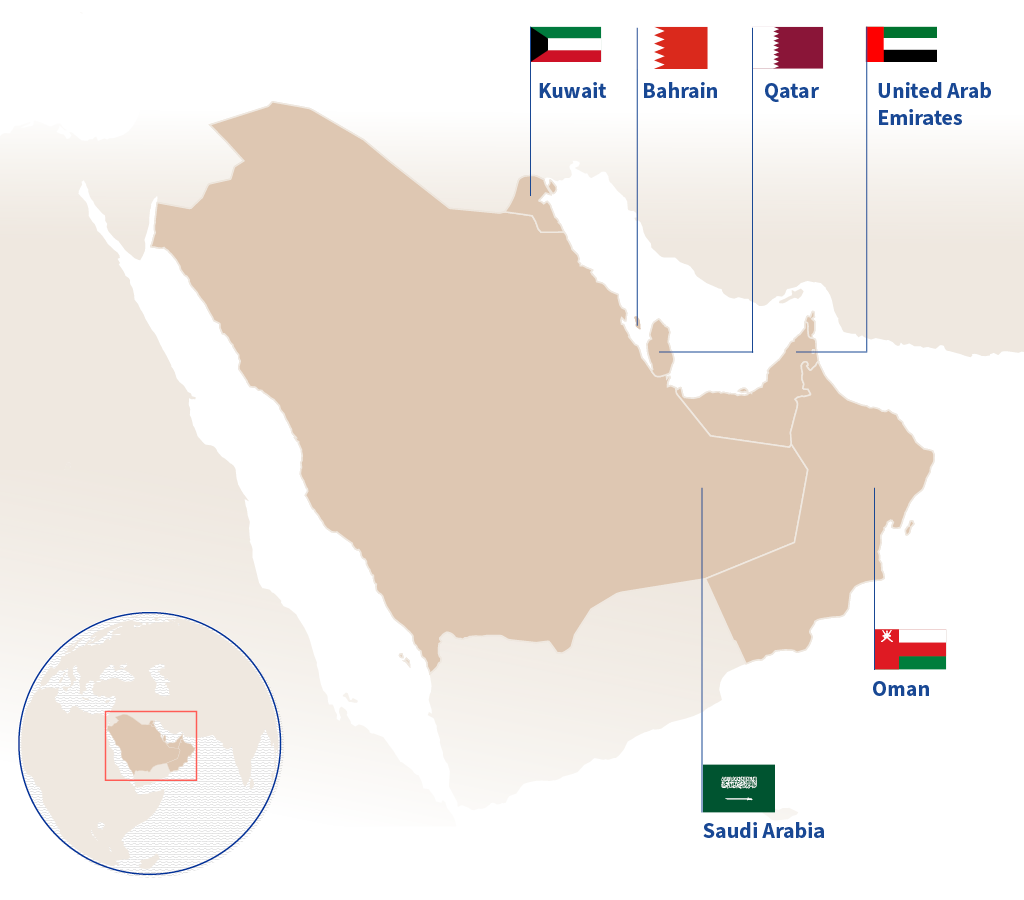
The Gulf holds almost a third of the world’s oil reserves.
EU–GCC relations are based on the cooperation agreement document signed in 1989, which establishes regular dialogues on cooperation between the EU and the GCC on economic relations, climate change, energy, the environment and research.
Trade in goods
In 2025, the total value of trade between the EU and the six countries of the Gulf Cooperation Council amounted to €165.6 billion, with almost €110 billion in EU exports and €55.6 billion in EU imports.
Over the last decade, EU-GCC trade increased by almost 30%, with imports growing by almost 54% and exports by almost 20%.
The key traded goods are fuels, accounting for over 75% of the EU’s imports from GCC countries.

€55.6 billion in EU imports from GCC countries


€110 billion in EU exports to GCC countries
The United Arab Emirates and Saudi Arabia account for over three-quarters of total EU-GCC trade. In terms of imports alone, the share per country is more balanced, with Saudi Arabia accounting for over 50% of EU-GCC imports, followed by the UAE (16.7%), Kuwait (13%) and Qatar (13.3%). This reflects the main category of products that the EU imports from these countries: fossil fuels.
Top goods the EU imports from the GCC

Mineral products (mainly oil and gas)

Base metals and metal products

Chemicals
Top goods the EU exports to the GCC

Machinery and appliances

Transport equipment

Chemicals
Trade in services
In 2024 (the last year for which data is available), trade in services between the EU and Gulf Cooperation Council countries was worth €84.4 billion, with €28.2 billion in EU imports and €56.2 billion in EU exports.
Trade in services between the EU and GCC countries more than doubled between 2014 and 2024 (+119%).
€28.2 billion in EU imports from GCC countries

€56.2 billion in EU exports to GCC countries
The United Arab Emirates account for over half (53%) of EU-GCC trade in services, followed by Saudi Arabia (almost 27%).
Foreign direct investments
In 2024, total EU foreign direct investment stock in the GCC region amounted to €163.1 billion, while the investment stock in the EU from the GCC region stood at €189.8 billion.
The largest investment partner among the GCC countries was the United Arab Emirates, accounting for almost 68% of outward investments and over 63% of inward investments.
Data sources
The data used on this page was extracted in July 2026 and comes from the following Eurostat datasets:
Last review: 24 July 2026
