We use cookies to improve your browsing experience. Necessary cookies are required to support essential features of the Council's website. Optional cookies help us produce anonymous and aggregated statistical reports to better serve your needs.
With your permission, we will use cookies to produce aggregated, anonymous data about our visitors' browsing and behaviour on our website. We will use this data to improve your experience on our website.
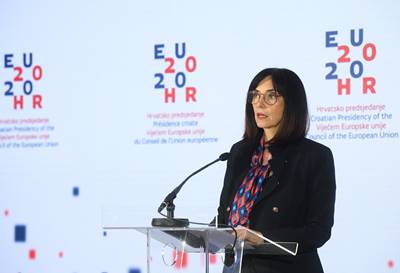
Video conference of ministers of research, 29 May 2020
Main results
Ministers exchanged views on the role that research and innovation should play in making our societies more resilient to crisis such as the one caused by the COVID-19.
Research and innovation are indispensable tools for the EU's exit from the current pandemic crisis. We have to make sure that through sufficient investment in research and innovation at both European and national level, coupled with an improved governance of the European Research Area, we remain a competitive player in the international arena.
Blaženka Divjak, Croatian minister of science and education
The exchange of views was structured around the following questions :
What are the main lessons learned in the management of this crisis from the R&I policy perspective?
How can R&I investments be used to boost the development of future jobs?
How can we embed this overall experience in the transformation of the European Research Area?
Ministers first took note of oral presentations by Prof. Peter Piot, scientific advisor to the President of the European Commission for COVID-19 related issues and by Prof. Igor Rudan, scientific advisor to the Croatian government for COVID-19 related issues.
As regards the main lessons learnt from the COVID-19 crisis, ministers broadly stressed the need for enhanced coordination of research activities and for data and knowledge sharing. They acknowledged the timely response based on the ERAvsCorona Action Plan and emphasised the need for flexibility in the implementation of Framework Programmes. In Horizon 2020 this flexibility enabled the Commission to mobilise 1 billion euros for research and innovation activities related to COVID-19. They also called for making better use of scientific knowledge in addressing the current economic crisis. Ministers called for a target-oriented research and innovation policy, by sharing political agendas and promoting common objectives, namely the green transition and digital transformation. Many ministers stressed the need to ensure Europe's technological and strategic sovereignty in critical fields. Furthermore, ministers stressed the importance of synergies and complementarity between the future framework program for research and innovation, Horizon Europe, and other EU programs.
In terms of jobs for the future, ministers pleaded in favour of a more inclusive EU research policy, that would enable the EU to make full use of existing human resources in member states. Public investment for the improvement of existing research infrastructures was mentioned as a necessary precondition for the EU to remain attractive to researchers.
Finally, as regards the future transformation of the European Research Area and the upcoming Commission communication on this issue, ministers called for a revision on the basis of the experience and lessons learned from the COVID-19 crisis and for reinforcing the links with the European Education Area.
At the end of the meeting, the representative of Germany presented the priorities of the upcoming German presidency of the Council in the field of research and innovation for the second half of 2020. These consist mainly of ensuring the continuation of the coordinated crisis management across the EU while making progress on mid-term and long-term EU objectives, such as synergies with other programmes, technological sovereignty, digital transformation and the green deal.
At the end of the video conference, the Croatian presidency issued a press release.
 Research and innovation are indispensable tools for the EU's exit from the current pandemic crisis. We have to make sure that through sufficient investment in research and innovation at both European and national level, coupled with an improved governance of the European Research Area, we remain a competitive player in the international arena.