- Eurogroup
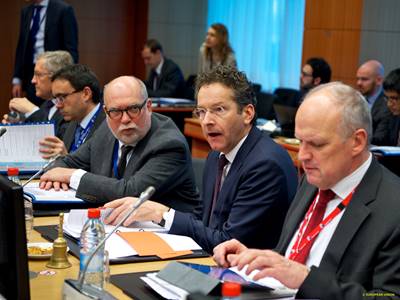
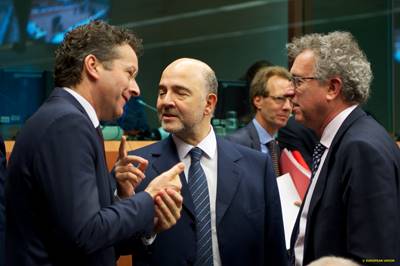
Eurogroup, 11/02/2016, 11 February 2016
Main results
Economic situation in the euro area
The Eurogroup exchanged views on the economic situation in the euro area, based on the European Commission's presentation of its 2016 winter economic forecast.
According to the forecast, the economic recovery in the euro area is set to continue, with GDP growth expected to reach 1.7% in 2016 and 1.9% in 2017.
The unemployment rate is expected to decrease from 11% in 2015 to 10.5% in 2016 and 10.2% in 2017.
The forecast lists low oil prices, the current euro exchange rate and low interest rates as some of the main factors driving the recovery. However, it also indicates that the economy faces headwinds and risks as a result of the growth slowdown in emerging economies.
Ministers broadly agreed with the European Commission's analysis and reaffirmed that, in the current environment of market volatility, it is particularly important to implement the rules agreed in the EU's fiscal, economic and financial governance framework.
Thematic discussion: quality of public expenditure in the euro area
Ministers agreed that it is important to make public spending more efficient to enhance the euro area's potential for economic growth.
They agreed to further discuss specific areas of public spending. The Eurogroup will pay particular attention to investment, healthcare and ageing-related expenditure at the upcoming Eurogroup meetings.
The discussion was based on a study conducted by the European Commission to assess the composition, efficiency and effectiveness of the euro area's government expenditure in fields such as education, healthcare, and research and development.
International role of the euro
The Eurogroup exchanged views on the European Commission's study on the international role of the euro, carried out at the Eurogroup's request.
The study shows that there are no systemic barriers to using the euro in international transactions. However, for historic reasons some sectors, such as oil or aviation, traditionally use invoices in US dollars.
Ministers agreed with the Commission's opinion that sound macroeconomic policies and further strengthening of the Economic and Monetary Union are among the key factors that could encourage the use of the euro in international transactions.
Portugal: state of play
The Eurogroup discussed the European Commission's opinion on Portugal's draft budgetary plan for 2016 and examined the results of the third post-programme surveillance mission.
Post-programme surveillance will be carried out until at least 75% of the assistance received under the programme has been repaid.
According to the Commission's opinion, Portugal's budgetary plan is at risk of non-compliance with the Stability and Growth Pact.
The Eurogroup issued a statement agreeing with the Commission's findings and welcoming the Portuguese government's commitment to prepare as of now additional measures to be implemented when needed to ensure the compliance of its 2016 budget with the Pact's rules.
The Eurogroup was also briefed by the institutions on the main results of the third post-programme surveillance mission, which took place between 25 January and 2 February 2016.
Portugal is expected to continue reforms begun during its adjustment programme in order to address challenges such as fiscal sustainability, competitiveness and stability of the financial sector.
- Eurogroup statement on the draft budgetary plan of Portugal for 2016
- Draft budgetary plans of euro area member states
- Statement by the European Commission and the ECB following the third post-programme surveillance mission to Portugal (February 2016)
Greece: state of play
The Eurogroup discussed the state of play of the ongoing first review of the implementation of Greece's economic adjustment programme, following the visit of the EU institutions' mission chiefs to Athens last week.
The Eurogroup called on the Greek authorities and the mission staff to continue their constructive cooperation and to work towards the rapid finalisation of the review, which covers issues such as pension reform, fiscal strategy and making the privatisation fund operational.
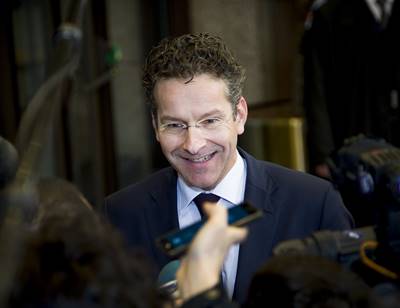
I think this is of prime importance for the legitimacy of our work. Jeroen Dijsselbloem
Transparency
At the initiative of the Eurogroup President, Jeroen Dijsselbloem, ministers discussed increasing the transparency of the Eurogroup's activities.
The Eurogroup agreed that more consistency is needed in the way citizens and national parliaments in the member states are informed of its activities.
Ministers agreed, as a first step, to make public the annotated agendas for Eurogroup meetings and the summaries of their discussions. They tasked the Eurogroup Working Group to further fine-tune the practical implementation of these proposals.
Meeting files
Outcome documents
Press releases
Press information
Press contacts
-
Johannes Kleis Spokesperson for Eurogroup President
- +32 478 83 26 64
- +32 2 281 75 32
If you are not a journalist, please send your request to the public information service.
Accreditation and press events
For general information on accreditation, please visit this page.
Media accreditation for international summits held outside the European Union will be handled by the government authorities of the host country.
Stay tuned
- Sign up for our email alerts to receive updates about this and similar meetings.
- Follow @EUCouncilPress for the latest press updates.
- X hashtag : #EUROGROUP
Photos and videos
Other meetings: Eurogroup
Past meetings
Upcoming meetings
Last review: 13 January 2025