- Education, Youth, Culture and Sports Council
Education, Youth, Culture and Sport Council, 22-23/05/2018, 22-23 May 2018
Main results
22 May 2018
Education
All EU citizens have the right to quality and inclusive education, training and lifelong learning in order to maintain and acquire skills that allow full participation in society and successful transitions in the labour market. The European Union can do a lot to help harness the full potential of education as a driver for job creation, economic growth and social fairness. Krasimir Valchev, minister for education and science of the Republic of Bulgaria and president of the Council
The Council adopted a revised recommendation on key competences for lifelong learning, the aim of which is to update the current recommendation from 2006 and take account of changes such as digitisation and constantly evolving labour markets.
The Council also adopted recommendation on promoting common values, inclusive education, and the European dimension of teaching, as well as conclusions on moving towards a vision of a European Education Area.
- Council recommendation on promoting common values, inclusive education and the European dimension of teaching
- Council conclusions on moving towards a vision of a European Education Area
Ministers had the opportunity to discuss the potential of universities in promoting regional growth and entrepreneurial and innovative skills, focusing in particular on what measures and incentives politicians can introduce to develop the potential of higher education institutions, and on the role of smart specialisation strategies and synergies.
The Council was also informed about a series of important issues such as the role of education in addressing anti-Semitism, the European schools sport day, and the work programme of the incoming Austrian presidency.
Youth
After an informal lunch on how to reform the existing mechanisms for consulting young people, the so-called structured dialogue on youth, the Council adopted conclusions on the role of youth in building a secure, cohesive and harmonious society, as well as conclusions on the role of youth in addressing the demographic challenges.
- Council conclusions on the role of youth in building a secure, cohesive and harmonious society in Europe
- Council conclusions on the role of youth in addressing the demographic challenges within the European Union
The Council also discussed the future priorities of the EU youth policy in the presence of Mr. Hassan Al Hilou, Community Leader of the YouthTalks Foundation. The debate was intended to feed the debate on the revised European Youth Strategy. The new strategy sets out proposals to define a European cooperation framework for youth for the period 2019-24 and focuses, among other things, on the active participation of young people in democratic life in Europe.
Finally ministers were informed about a declaration on the prevention of violent radicalisation, the European Youth Together initiative, and the work programme of the incoming Austrian presidency.
23 May 2018
Culture/Audiovisual
The crucial role of culture in addressing key social and economic challenges was recognised by the European Council in its conclusions of December 2017. We are working to translate principles into reality and to outline a long term vision for the contribution of culture to the EU after 2020. Boil Banov, minister for culture of the Republic of Bulgaria and president of the Council
The Council had an exchange of views on a long term vision for the contribution of culture to the EU after 2020, focusing in particular on what actions need to be undertaken at EU level to raise the level of ambition in the cultural field, so that culture becomes a real driver of change in the future.
The Council also adopted conclusions on bringing cultural heritage to the fore across policies in the EU.
Ministers were also informed about a series of important topics ranging from the issue of illicit imports of cultural goods from archaeological sites, the European capitals of culture in 2022, the proposal to change the VAT directive to better take account of cultural policies, and the work programme of the incoming Austrian presidency.
Sport
Young people and sport play a key role in building secure and cohesive societies, addressing societal changes and promoting the common values of the EU. It is our duty to empower our youth and to create the right conditions for sport to play its role in society. Krasen Kralev, minister for youth and sports of the Republic of Bulgaria and president of the Council
After an informal lunch meeting of sports ministers with the President of UEFA, Mr Čeferin, to discuss the future of club and national team competitions, the Council adopted conclusions on promoting the common values of the EU through sports.
Ministers then held a policy debate on the commercialisation of elite sports and the sustainability of the European model of sport, also in the presence of Mr Čeferin. Ministers discussed in particular the challenges faced by the European model and how to make sure that sport in Europe preserves its nature and strong foundations.
The Council was also informed about the latest meetings of the World Anti-Doping Agency, the declaration "For a Europe of sport", and the work programme of the incoming Austrian presidency.
Meeting files
Preparatory documents
Press releases
- Waste management and recycling: Council adopts new rules
- 22/05/2018
- Organic farming: new EU rules adopted
- 22/05/2018
- New type-approval and market surveillance system for motor vehicles: Council concludes reform of the sector
- 22/05/2018
- European Parliament election dates: Council confirms 23 to 26 May 2019
- 22/05/2018
Press information
Press contacts
-
Maria Daniela Lenzu Press officer
- +32 470 88 04 02
- +32 2 281 21 46
If you are not a journalist, please send your request to the public information service.
Accreditation and press events
For general information on accreditation, please visit this page.
Media accreditation for international summits held outside the European Union will be handled by the government authorities of the host country.
Stay tuned
- Sign up for our email alerts to receive updates about this and similar meetings.
- Follow @EUCouncilPress for the latest press updates.
- X hashtag : #EYCS
Photos and videos

Press conference 23/05/2018
Roundtable, Culture 23/05/2018
Arrival and doorstep by Boil Banov 23/05/2018
Press conference 22/05/2018
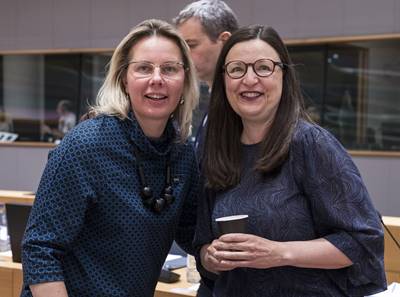
Liga Lejina and Anna Ekstrom 22/05/2018
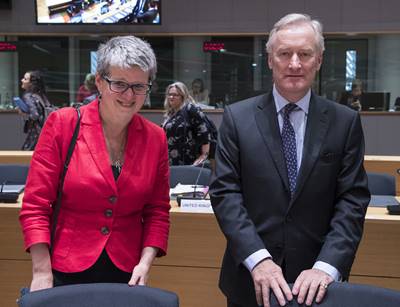
Katrina Williams and Thomas Ashton 22/05/2018
Roundtable, Education 22/05/2018
Arrival and doorstep by Ulrich Commerçon 22/05/2018
Arrival and doorstep by Juliane Bogner-Strauss 22/05/2018
Arrival and doorstep by Krasimir Valchev 22/05/2018
Other meetings: Education, Youth, Culture and Sports Council
Past meetings
Last review: 14 January 2025