"Käytämme evästeitä käyttökokemuksesi parantamiseen. Välttämättömät evästeet ovat tarpeen neuvoston verkkosivuston olennaisten toimintojen tukemiseksi. Valinnaisten evästeiden avulla tuotamme yhdistettyjä anonyymejä tilastotietoja, joiden avulla voimme paremmin vastata käyttäjien tarpeisiin.
Käytämme luvallasi evästeitä tuottamaan yhdistettyjä anonyymejä tietoja vierailijoidemme selaushistoriasta ja sivustomme käytöstä. Näiden tietojen avulla pyrimme parantamaan käyttökokemusta sivustollamme.
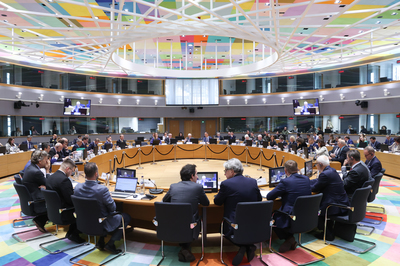
The Foreign Affairs Council in its defence configuration discussed EU military support to Ukraine.
The Ukrainian Minister of Defence, Rustem Umerov, briefly intervened via VTC to report on the situation on the ground, and NATO Secretary General, Jens Stoltenberg, physically joined EU Defence Ministers to hold an informal discussion on the interplay between EU and NATO military support.
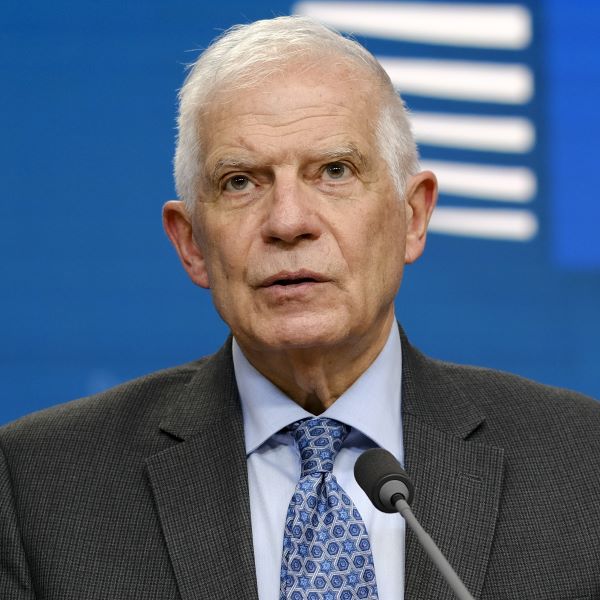
We also discussed about […] the possibility of lifting restrictions on Western weapons used by Ukrainian forces to target military objectives in Russian territory; in self-defence but in Russian territory.
It's clear that this is a legitimate action under international law, when it is being used in a proportionate manner, but it is also clear that it is a decision for each individual member state to take, and to take their responsibility on doing that or not.
Josep Borrell, High Representative for Foreign Affairs and Security Policy
The ministerial discussion touched on commitments on air defence systems, ammunition shells, and ways to increase defence industrial production in Europe. Ministers also referred to the need to ensure the timely implementation of the Ukraine Assistance Fund, and use of the extraordinary net profits generated by immobilised Russian assets for the benefit of Ukrainian Armed Forces.
Lastly, the discussion also focused on the EU Military Assistance Mission in support of Ukraine (EUMAM Ukraine), which will have trained 60.000 Ukrainian soldiers by the end of the summer, while adapting the EU’s training offer to Ukraine’s needs
The Council held a discussion on how to enhance defence readiness, with a focus on strengthening the EU’s Defence Technological and Industrial Base on the basis of the European Defence Industrial Strategy (EDIS) and improved access to public and private financing.
Readiness is not growing on trees. Readiness has to be built. It has to be built engaging resources, mobilising resources through a strong political will, because it requires changes, it requires efforts, and funding. But it's clear that we have to spend better. We have to spend together as cooperatively as we can, and we have to spend more European, not only European, but certainly more European.
Josep Borrell, High Representative for Foreign Affairs and Security Policy
EU ministers agrees that, in order to fulfil the EU’s ambitions for defence industrial readiness, it is key to guarantee the necessary financial support in the medium and longer term.
Financing EU security and defence will be one of the topics discussed by the European Council at its June meeting.
The Council also took stock of the result of the last EU-Ukraine Defence Industries Forum, which took place on 6 May in Brussels gathering more than 400 participants.
Under current affairs, EU Defence Ministers received an update on CSDP missions and operations, particularly in the Red Sea and the Sahel, and was informed about the EU Rapid Deployment Capacity, and the Permanent Structured Cooperation (PESCO).
Council conclusions
The Council approved conclusions on EU policy on the EU security and defence.
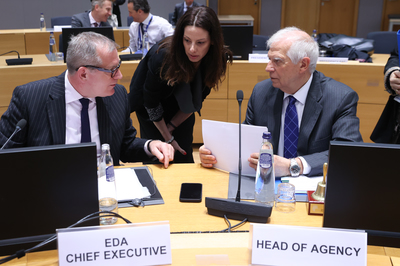
EU ministers of defence met in the European Defence Agency (EDA) Steering Board under the chairmanship of High Representative Borrell in his capacity as Head of the Agency right before the meeting of the FAC Defence.
The Steering Board approved the agency’s 2024 Long-Term Review (LTR). As strategic guidance given to EDA, the 2024 LTR outlines five core tasks for the Agency with a stronger focus on supporting member states through the full development cycle of military capabilities. Ministers agreed to increase the number of EDA’s core tasks from three to five, with dedicated taskings on aggregating demand towards joint procurement and enabling collaborative defence research, technology, and innovation. Ministers were also briefed on preliminary opportunities stemming from the 2024 Coordinated Annual Review on Defence (CARD) and marked the 20th anniversary of the establishment of the Agency.
Tiedotusvälineiden akkreditoinnista Euroopan unionin ulkopuolella järjestettäviin kansainvälisiin huippukokouksiin vastaavat järjestäjämaan viranomaiset.