Climate
Find out how EU countries are fighting climate change and working to move towards a net-zero economy.
The EU wants to reach net ‑zero greenhouse gas emissions by 2050, in line with the Paris Agreement. The European climate law makes this goal binding.
The rules under the European Green Deal drive the transition towards a climate-neutral economy and society.
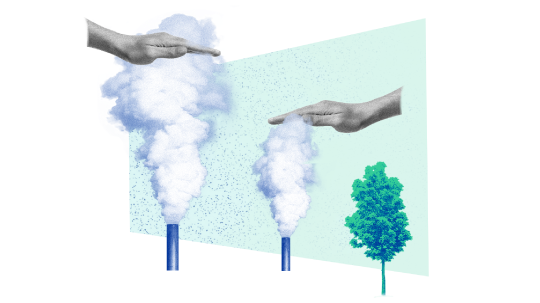
What the EU is doing on climate change

To meet its climate goals, the EU has adopted laws to substantially reduce emissions.


The EU, together with its member states, is the biggest provider of climate finance in the world.
Climate action by sector
Reducing greenhouse gas emissions
The EU and its member countries are legally bound to cut greenhouse gas emissions by at least 55% by 2030 and by at least 90% by 2040, compared to 1990 levels, as an intermediate step to reach net-zero emissions by 2050. The latest data shows that emissions are falling across all sectors, but there is still a long way to get to net-zero.
The chart shows the EU's net greenhouse gas emissions in million tonnes of CO2 equivalent (MtCO2e).
Line chart showing the evolution of EU greenhouse gas emissions from 1990 to 2022. The line shows a downward trend going from 4 712.3 million tonnes of CO2 equivalent (MtCO2e) in 1990 to 3 248.21 million tonnes in 2022. The 2020 and 2030 emissions reduction goals of the EU, respectively -20% reduction and -55% reduction compared to 1990 levels, are marked on the chart. Source: European Environment Agency
The impacts of climate change
According to the European state of the climate report 2024, the three warmest years on record in Europe have all occurred since 2020, with 2024 ranking as the warmest.
2024 saw some record extreme weather events, such as floods, wildfires and storms, which had serious consequences for people and the economy.
5 facts about the EU's goal of climate neutrality
Fighting climate change is imperative for the future of Europe and the world. The European climate law enacted in legislation the EU's objective of becoming climate-neutral by 2050. This goal is in line with the commitment made by the EU and its member states in signing the Paris Agreement in 2015.
What does climate neutrality mean and how does the EU plan to achieve this goal?

Latest news
- Simplification: Council agrees negotiating stance to fast track environmental assessments
- Joint Communiqué - Seventh Trilateral Meeting of the African Union, the European Union and the United Nations
- Market stability reserve: Council agrees targeted amendment for a resilient and predictable carbon market
Latest explainers

Simplification of EU rules
Forests: facts and figures

EU cooperation with the United Nations
Last review: 20 July 2026
