- Economic and Financial Affairs Council
Economic and Financial Affairs Council, 08/03/2016, 8 March 2016
Main results
Corporate tax avoidance
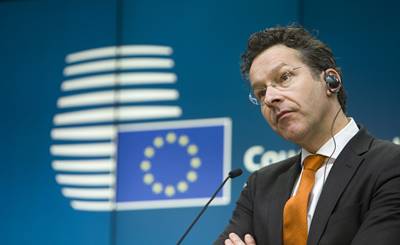
We have strong support for a political agreement on this directive, which will accurately transpose into EU legislation the OECD standard on country-by-country reporting” Jeroen Dijsselbloem, minister for finance of The Netherlands and president of the Council
The Council agreed its stance, pending the European Parliament's opinion, on a draft directive on the exchange of tax-related information on the activities of multinational companies.
“This is the first step we are taking in our work on the anti-tax-avoidance package”, said Jeroen Dijsselbloem, minister for finance of The Netherlands and president of the Council. “We have strong support for a political agreement on this directive, which will accurately transpose into EU legislation the OECD standard on country-by-country reporting.”
Political agreement is subject to one member state consulting its parliament.
The directive will require multinationals to report tax-related information, detailed country-by-country, and requiring national tax authorities to exchange that information automatically.
It covers multinationals with a total consolidated group revenue of at least €750 million, which hold 90% of corporate revenues.
Code of conduct on business taxation
The Council adopted conclusions on the strengthening of a code of conduct aimed at eliminating measures that can create situations of unfair tax competition.
The code of conduct is used in assessing the harmfulness of tax measures adopted, or that are in the process of being adopted, by the member states. A working group oversees its implementation.
The Council's conclusions foresee an enhancement of the governance, transparency and working methods of the working group.
Efficiency will be improved by speeding up the assessment of potentially harmful tax regimes, with an earlier and more frequent involvement of the Council. Information to the public on the group's ongoing and past work will be enhanced.
The presidency intends a further decision to be taken by the end of June 2016 on the revision of the group's mandate.
Economic and fiscal policy
Ministers discussed implementation of country-specific recommendations under the "European Semester", the EU's annual policy monitoring process. The Commission presented reports on the economic policies of the member states, focusing on measures taken to remove barriers to investment.
The Council issued a recommendation on the economic policies of the euro area, enabling due account to be taken of eurozone issues in the 2016 country-specific recommendations.
It also adopted conclusions on fiscal sustainability, identifying the challenges faced by member states as concerns their public finances.
Meeting files
Outcome documents
- Outcome of the Council meeting
- Indicative programme - Economic and Financial Affairs Council, 08 March 2016
- Provisional agenda, Economic and Financial Affairs Council, 8 March 2016
- List of A items, non-legislative activities, Economic and Financial Affairs Council, 8 March 2016
- Background brief
- List of participants
Press releases
- Corporate tax avoidance: Council agrees its stance on the exchange of tax-related information on multinationals
- 08/03/2016
- Council conclusions on the structure and rates of excise duty applied to manufactured tobacco
- 08/03/2016
- Council conclusions on the code of conduct on business taxation
- 08/03/2016
- Council conclusions on the fiscal sustainability report
- 08/03/2016
Press information
Press contacts
-
Patrick McCullough Press officer
- +32 471 33 38 46
- +32 2 281 91 19
If you are not a journalist, please send your request to the public information service.
Accreditation and press events
For general information on accreditation, please visit this page.
Media accreditation for international summits held outside the European Union will be handled by the government authorities of the host country.
Stay tuned
- Sign up for our email alerts to receive updates about this and similar meetings.
- Follow @EUCouncilPress for the latest press updates.
- X hashtag : #ECOFIN
Photos and videos

Other meetings: Economic and Financial Affairs Council
Past meetings
Last review: 8 January 2025
