We use cookies to improve your browsing experience. Necessary cookies are required to support essential features of the Council's website. Optional cookies help us produce anonymous and aggregated statistical reports to better serve your needs.
With your permission, we will use cookies to produce aggregated, anonymous data about our visitors' browsing and behaviour on our website. We will use this data to improve your experience on our website.
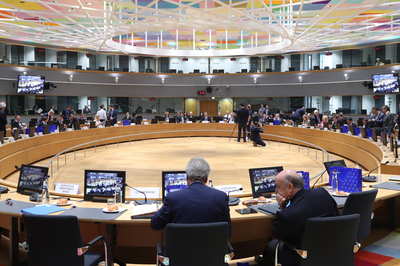
Economic and Financial Affairs Council, 16 July 2024
Main results
Work programme of the presidency
The Hungarian presidency presented its priorities and work programme in the field of economic and financial affairs, in particular in the fields of economic policy, annual budget, financial services, taxation, customs issues.
The main priority of the Hungarian presidency is to improve the competitiveness of the European economy. We will focus our efforts on areas where EU action has real added value and where we can effectively contribute to macroeconomic stability and prosperity in a geopolitically uncertain environment. Despite having limited fiscal space, we must find the best ways to achieve these objectives for the long-term well-being of EU citizens.
Ministers took stock of the implementation of the Recovery and Resilience Facility (RRF).
The Council adopted an implementing decision approving Germany’s modified recovery and resilience plan, that includes a new REPowerEU chapter. This will contribute to accelerating Germany’s transition towards clean energy by increasing the share of renewables in the German energy mix.
The Council also approved updated plans submitted by Greece, Cyprus, Poland and Finland.
The Council took note of the state of play of the economic and financial impact of Russia’s aggression against Ukraine.
Ministers were informed about the economic and budgetary situation in Ukraine, including on the implementation of the Ukraine Facility and the state of progress on the implementation of the G7 agreement on an additional loan of 50 billion US dollars to Ukraine to be serviced and repaid by future flows of extraordinary revenues stemming from the immobilisation of Russian sovereign assets.
Taking work forward on the European Semester, the Council approved country-specific recommendations on the economic, social, employment, structural and budgetary policies of each member state.
The Council also approved conclusions on the 2024 in-depth reviews under the macroeconomic imbalance procedure.
Stability and growth pact: Excessive deficit procedures
The Commission presented its proposals for Council decisions on the opening of an excessive deficit procedure for seven member states: Belgium, France, Italy, Hungary, Malta, Poland and Slovakia. This was followed by an exchange of views by ministers.
The Council also discussed a Commission recommendation for a Council decision on Romania, which is under an excessive deficit procedure since 2020 and has not taken effective action to remedy this situation.
The Council will be invited to adopt the decisions by the end of July 2024.
The European Commission and the European Central Bank presented convergence reports followed by an exchange of views by ministers. The convergence reports examine whether member states outside the euro area satisfy the necessary conditions to adopt the single currency.
The Council took note that none of the member states that benefit from a derogation fulfil criteria to join the euro area.
The 2024 Convergence Reports submitted in June 2024, cover the following six member states with a derogation: Bulgaria, Czechia, Hungary, Poland, Romania and Sweden. Denmark has negotiated opt-out arrangements and will therefore not be the subject of a convergence assessment until it requests it.
The Presidency presented the state of play of legislative proposals in the field of financial services. This is a recurrent item on the Council agenda.
The Council approved the position of the European Union and its member states for the second substantive session of the ad hoc committee to draft terms of reference for a UN Framework Convention on international tax cooperation.
The second substantive session of the ad hoc committee will take place from 29 July to 16 August 2024.