We use cookies to improve your browsing experience. Necessary cookies are required to support essential features of the Council's website. Optional cookies help us produce anonymous and aggregated statistical reports to better serve your needs.
With your permission, we will use cookies to produce aggregated, anonymous data about our visitors' browsing and behaviour on our website. We will use this data to improve your experience on our website.
The Council held a policy debate on EU–US trade relations. Ministers reconfirmed the EU's general stance towards the new US trade policy and reaffirmed the EU's unity in relation to transatlantic trade relations. A mutually acceptable and balanced solution within the 90-day partial suspension of US measures and suspension of the first (limited) set of EU countermeasures remains the EU’s preferred option.
In the meantime, the EU is taking the necessary steps to be ready should further countermeasures be needed. Furthermore, risks related to trade diversion will be carefully monitored and addressed as needed. Efforts to diversify EU trade flows are ongoing, alongside stepping up the pace of work to unlock the full potential of the single market to promote and facilitate business within the EU.
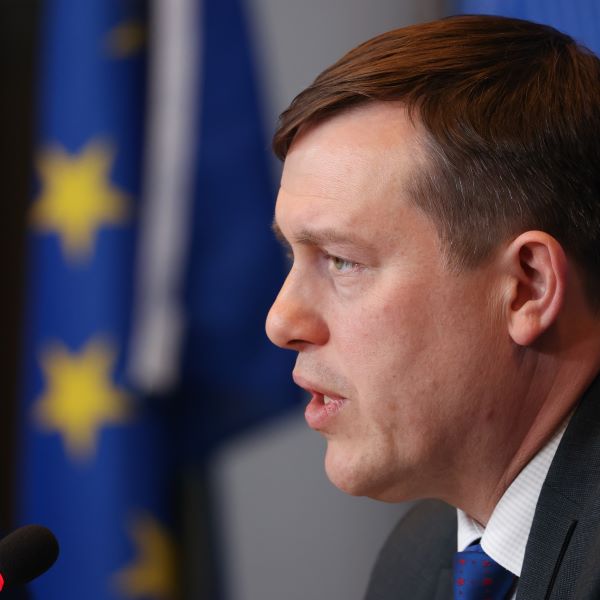
We are meeting in a halfway point from the moment that both EU and US paused on our potentially difficult aspects of our trade relations. We are determined to make the most of the remaining time. Europe is about building bridges, not walls. Our approach is to negotiate, but also prepare for plan B.
Michał Baranowski, Undersecretary of State at the Ministry of Economic Development and Technology of Poland, responsible for Trade
The US administration has introduced several tariffs, including 25% on steel, aluminium, and their derivatives, 25% on cars, light trucks, and automotive parts, and a 10% “baseline” tariff on all trading partners. The country-specific part of the US so-called “rebalancing” (universal) tariffs is paused until 9 July. In response to US tariffs on steel and aluminium, and their derivatives, the EU has decided to impose countermeasures but has suspended them until 14 July to provide time for further discussions.
The Council exchanged views on European economic security, including the review of the FDI Screening Regulation, export controls, and outbound investment controls as well on the governance of economic security in the Council.
Presidency informed the Council of the next steps in the work on the review of the FDI Screening Regulation. It also reported on progress on the co-ordination of export controls and took note of the Commission recommendation on outbound investments.
The Commission updated the Council on its ongoing work in the three pillars of economic security - promote, protect and partner - and on the governance of the economic security within the Commission.
Ministers reiterated the calls for greater co-ordination in the Council, and recalled the importance of a balanced approach to economic security.
Ministers dedicated the working lunch to ongoing trade negotiations. The discussion touched upon ongoing negotiations with India, Australia, Indonesia, Thailand, the Philippines, Malaysia, and the Cooperation Council for the Arab States of the Gulf (GCC) and concluded negotiations with Mercosur or Mexico.