We use cookies to improve your browsing experience. Necessary cookies are required to support essential features of the Council's website. Optional cookies help us produce anonymous and aggregated statistical reports to better serve your needs.
With your permission, we will use cookies to produce aggregated, anonymous data about our visitors' browsing and behaviour on our website. We will use this data to improve your experience on our website.
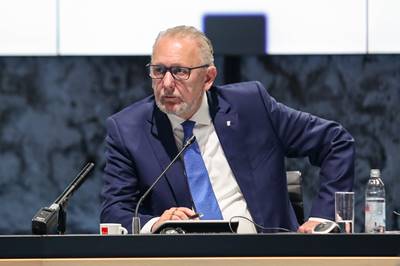
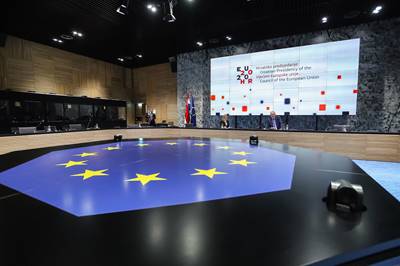
Video conference of home affairs ministers, 5 June 2020
Main results
Home affairs ministers discussed the response to the COVID-19 pandemic in the field of internal border controls and the free movement of persons.
As the overall health situation improves, all member states are in the process of de-escalating and gradually lifting some of the measures that have been applied at national or regional level. This includes the gradual lifting of border controls and the full restoration of the free movement of persons which has been limited due to the pandemic.
EU member states and institutions have worked closely together to contain the spread of the virus. Now that the situation is improving, coordination continues to be essential. We need to ensure that the lifting of controls is done with proportionality and avoiding any discrimination based on nationality. Only by working together can we provide citizens the certainty they need to get their lives moving again.
Davor Bozinovic, Deputy Prime Minister and Minister of Interior of Croatia
A majority of member states will have lifted the controls at their internal borders and the related travel restrictions by 15 June, with others due to follow until the end of the month. Ministers agreed that any remaining restrictions will be based on objective health-related criteria, non-discriminatory and proportionate. They will continue to coordinate closely and under the lead of the Commission.
Ministers also discussed how long the EU travel restrictions with regard to the entry of third country nationals should be maintained and what criteria and measures could be applied once the restrictions start to be lifted.
They agreed to a unified approach to the gradual lifting of the restrictions on non-essential travel, which is not expected to take place before 1 July. They also highlighted the need for clear criteria for the next steps. On the basis of this discussion, the Commission will propose a way forward for the lifting of controls at the external borders in a coordinated manner.
At the start of the meeting, the Presidency informed ministers of the operational results of the 2019 EU policy cycle to fight organised crime(EMPACT).
Malta also updated ministers on the migration situation in the Central Mediterranean and the challenges the country is facing. The Presidency reported on the EU-US Justice and Home Affairs ministerial videoconference, which took place on 28 May. The incoming German presidency presented its work programme, which will focus on strengthening the EU civil protection mechanism, moving forward on the reform of the EU migration and asylum policy and strengthening EU internal security and fighting terrorism.
The Commission informed ministers in writing of the ongoing implementation of the interoperability regulations.
 EU member states and institutions have worked closely together to contain the spread of the virus. Now that the situation is improving, coordination continues to be essential. We need to ensure that the lifting of controls is done with proportionality and avoiding any discrimination based on nationality. Only by working together can we provide citizens the certainty they need to get their lives moving again.