Economic and Financial Affairs Council
Economic and Financial Affairs Council, 21/02/2017, 21 February 2017
Main results
Corporate tax avoidance - Hybrid mismatches
The Council agreed its position on rules aimed at closing down 'hybrid mismatches' with the tax systems of third countries.
The draft directive is the latest of a number of measures designed to prevent tax avoidance by large companies.
It will prevent them from exploiting disparities between two or more tax jurisdictions to reduce their overall tax liability.
And it will contribute to implementation of 2015 OECD recommendations addressing corporate tax base erosion and profit shifting (BEPS).
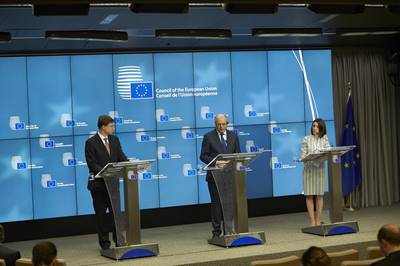
“The EU is at the forefront of the fight against tax avoidance”, said Edward Scicluna, minister for finance of Malta, which currently holds the Council presidency. “We want to ensure coherent implementation in EU law of the OECD's BEPS action plan.”
The proposal addresses hybrid mismatches with regard to non-EU countries, given that intra-EU disparities are covered by the 'anti-tax-avoidance directive' adopted in July 2016.
EU list of non-cooperative jurisdictions
The Council took stock of work on an EU list of non-cooperative third-country jurisdictions in taxation matters.
This initiative follows up the EU's external strategy for taxation and will contribute to ongoing efforts to prevent tax fraud.
“Our aim in establishing an EU list is to promote good standards that are already applicable in the EU”, Mr Scicluna said. “Jurisdictions will be subject to a screening. They will be included on the list if it is determined that their tax policies do not match our minimum standards.”
The Council is due to finalise the list of non-cooperative jurisdictions before the end of 2017.
The work is being conducted in parallel with the OECD global forum on transparency and exchange of information for tax purposes.
EU budget issues
The Council set its priorities for the 2018 EU budget, calling for a realistic budget that strikes the right balance between fiscal consolidation and new investments conducive to growth and jobs.
Ministers also called for the 2018 budget to provide adequate resources to continue supporting traditional and evolving priorities within the EU, namely to help economic recovery, address humanitarian and security challenges and honour commitments made.
The Council also recommended to the European Parliament to grant discharge to the Commission for the implementation of the 2015 EU budget.
Meeting files
Outcome documents
- Outcome of the Council meeting
- Indicative programme - Economic and Financial Affairs Council meeting, 21 February 2017
- Provisional agenda, Economic and Financial Affairs Council, 21 February 2017
- List of A items, non-legislative activities, Economic and Financial Affairs Council, 21 February 2017
- List of participants
Press releases
Press information
Press contacts
-
Patrick McCullough Press officer
- +32 471 33 38 46
- +32 2 281 91 19
If you are not a journalist, please send your request to the public information service.
Accreditation and press events
For general information on accreditation, please visit this page.
Media accreditation for international summits held outside the European Union will be handled by the government authorities of the host country.
Stay tuned
- Sign up for our email alerts to receive updates about this and similar meetings.
- Follow @EUCouncilPress for the latest press updates.
- X hashtag : #ECOFIN
Photos and videos

Other meetings: Economic and Financial Affairs Council
Past meetings
Last review: 8 January 2025