We use cookies to improve your browsing experience. Necessary cookies are required to support essential features of the Council's website. Optional cookies help us produce anonymous and aggregated statistical reports to better serve your needs.
With your permission, we will use cookies to produce aggregated, anonymous data about our visitors' browsing and behaviour on our website. We will use this data to improve your experience on our website.
Employment, Social Policy, Health and Consumer Affairs Council
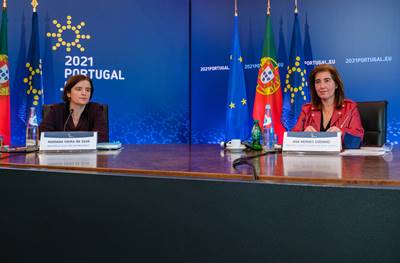
Informal video conference of employment and social policy ministers, 15 March 2021
Main results
Employment and social policies ministers discussed today a wide range of files, particularly the employment and social policies in the European Semester, the European Pillar of Social Rights Action Plan and equality and non-discrimination policies and initiatives.
Employment and social policies in the European Semester in the context of the recovery and resilience plans
Ministers exchanged views on employment and social policies in the European Semester 2021 in the context of the recovery and resilience plans (RRPs). Ministers overwhelmingly agreed that employment and social protection as well as the fight against poverty must be core themes in the member states' RRPs. Labour market integration measures for people who lost their jobs during the pandemic was a commitment supported by many ministers.
Ministers particularly focused on the need to boost re-skill and up-skill Europe's workers so as enable them to remain competitive and to increase their resilience to current and future challenges. Many ministers also highlighted their clear priority to address youth unemployment and help young Europeans to enter the labour market.
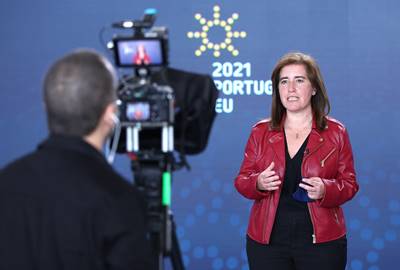
The upcoming Social Summit in Porto will be a milestone in taking Europe's social model to the next level. It is a key moment not only for our presidency but for the EU as a whole.
Ana Mendes Godinho, Minister for Labour, Solidarity and Social Security of Portugal
Ministers discussed the recently published European Pillar of Social Rights Action Plan, expressing their support for the plan's objectives in building a more social and inclusive Europe. Delegations considered the qualitative and quantitative EU-level targets set in the plan very ambitious, but realistic, and committed to work towards these aims. Ministers also welcomed the proposed revision of the social scoreboard as basis for monitoring the implementation of the Pillar principles in the framework of the European Semester process.
The support for initiatives like the child guarantee and the European platform on combating homelessness was strong, as ministers stressed the importance of addressing child poverty and homelessness in the EU.
Ministers also outlined their active labour market policies, already implemented or planned within their recovery and resilience plans, in order to support a robust, future-oriented recovery, preparing for the digital and green transition and taking into account also the demographic changes of our societies. The re-skilling and up-skilling of workers was highlighted as an important priority by many delegations.
Equality, non-discrimination and diversity in the EU
Ministers held a policy debate on ways to strengthen equality, non-discrimination and diversity as a policy priority in the EU. Several ministers acknowledged that many citizens still experience discrimination in the EU and highlighted the need to keep working on protecting all citizens against all types of discrimination. The COVID-19 pandemic has affected women and other vulnerable groups disproportionately and exacerbated discrimination.
Ministers broadly supported action at the EU level to advance equality and stressed the importance of integrating equality policy into relevant horizontal initiatives. They also referred to national strategies and policy initiatives aiming at protecting different groups susceptible to discrimination, including on the basis of gender, age, sexual orientation, religion or belief, ethnic or racial origin and disability. A number of ministers particularly highlighted the importance of efforts to promote gender equality, to combat racism, including discrimination against Roma and to protect the rights of the LGBTIQ community.
It's reassuring to see that we are all committed to a union of values and a safe society, where everyone can fulfill their potential. There is a wide range of national strategies focused on tackling discrimination and despite the different starting points in member states, I am confident that we can eliminate the obstacles together.
Mariana Vieira da Silva, Minister of State for the Presidency of the Council of Ministers of Portugal
Any other business
European platform on combating homelessness
The Commission informed ministers about the planned European platform on combating homelessness and the presidency shared its plans to host a high-level conference on homelessness in Lisbon on 21 June.
Green paper on ageing
The Commission informed ministers about its recently released green paper on ageing, focused on addressing demographic challenges in Europe.
Mainstreaming of ageing
The presidency informed ministers about the adoption by written procedure of the Council conclusions on the mainstreaming of ageing. The conclusions invite member states to elaborate a national Strategic Framework for Mainstreaming Ageing as well as other initiatives which enable older people across the EU to enjoy their fundamental rights and reach their full potential.
The presidency informed ministers about the Tripartite Social Summit which will take place on 24 March 2021, just ahead of the March European Council.
EMCO and SPC work programmes 2021
The Chairs of the Employment Committee (EMCO) and Social Protection Committee (SPC), which are advisory policy committees to the ministers in the EPSCO Council, informed ministers about their 2021 work programmes which will largely focus on the European Pillar of Social Rights Action Plan.
Recommendation on Roma equality, inclusion and participation
The presidency informed ministers about the adoption, by written procedure, of the Council recommendation on Roma equality, inclusion and participation. The recommendation steps up the member states' commitment to effectively fight discrimination against Roma people and to promote their inclusion in the key areas of education, employment, health and housing.
The Commission informed ministers about the EU Anti-racism Action Plan, initially presented in September 2020.
Binding pay transparency measures
The Commission presented to ministers its recent proposal for a directive to strengthen the application of the principle of equal pay for equal work or work of equal value between men and women through pay transparency and enforcement mechanisms.
 The upcoming Social Summit in Porto will be a milestone in taking Europe's social model to the next level. It is a key moment not only for our presidency but for the EU as a whole.