We use cookies to improve your browsing experience. Necessary cookies are required to support essential features of the Council's website. Optional cookies help us produce anonymous and aggregated statistical reports to better serve your needs.
With your permission, we will use cookies to produce aggregated, anonymous data about our visitors' browsing and behaviour on our website. We will use this data to improve your experience on our website.
Education, Youth, Culture and Sport Council (Culture and Sport), 26 November 2024
Main results
Sport
Lasting legacy of major sporting events
The Council approved conclusions on fostering the lasting legacy of major sporting events. These conclusions focus on the potential of major sporting events to improve the lives and wellbeing of EU citizens in the long term and thus leave a lasting legacy.
Major sporting events can provide long-lasting benefits, from renewed infrastructure to better awareness of healthy lifestyles, yet such benefits require sustained commitment. Today’s conclusions call for a strategic approach to maximise and maintain the lasting legacy of major sporting events in Europe.
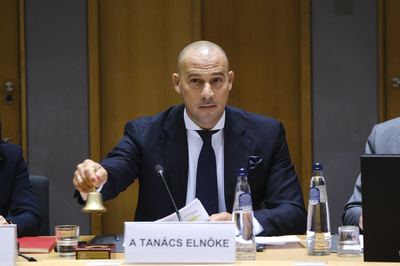
Ádám Schmidt, Hungarian Minister of State for Sport
In its conclusions, the Council seeks to place economic, social and environmental sustainability at the heart of reflections on the benefits and drawbacks of hosting major sporting events.
In particular, the conclusions highlight benefits such as infrastructure upgrades and job creation. The Council calls on member states to use major sporting events as an opportunity to promote sport and physical activity across the population, including young people and people from disadvantaged backgrounds.
The conclusions also point to the lasting environmental legacy of sporting events that are organised in line with good environmental practices.
Ministers held a policy debate on the role of the key features of a European Sport Model, focusing on those aspects that could preserve and promote EU values in sport.
The debate focused on those features that should be further strengthened to preserve the values of sport in Europe, and the role that the EU Work Plan for Sport 2024-2027 could play in this regard. Ministers also discussed ways to strengthen the link between professional and grassroots sport.
Particular reference was made to the role of sport as a ‘social immune defence’, i.e. a form of defence against social ills.
The session was attended by the president of UEFA, Aleksander Čeferin.
The role of libraries in media literacy development
Ministers took part in a policy debate on the role of libraries in media literacy development.
Libraries represent a significant contribution to media literacy development, which has become a pressing need in an increasingly digital and information-saturated world. However, libraries face several key challenges to fully realise this potential. In our view, the three main challenges that need to be addressed are: the role of libraries in filling media literacy education gaps; the infrastructure and funding of libraries; and the skill development of librarians.
Veronika Varga-Bajusz, Hungarian Minister of State for Higher Education, Vocational and Adult Training, and Youth
The Council’s discussion focused on the importance of libraries in promoting media literacy and critical reading skills, the resources needed to provide high-quality services, and the skills required by librarians.
The Council approved conclusions on improving and fostering access to culture, in which it recognises the importance of cultural participation for personal health, well-being, territorial and societal cohesion, and strengthening democracy.
It calls on member states to safeguard and promote free and equal access to culture at all levels, including by developing cultural rights plans. It also invites the Commission to embed culture in its overarching policy goals.
The following items were dealt with under other business:
Work programme of the incoming presidency (information from Poland)
Supporting collaboration and engagement in cultural and creative sectors at the EU level (information from Austria, Bulgaria, Cyprus, Czechia, Estonia, France, Finland, Germany, Greece, Ireland, Latvia, Lithuania, Slovakia, Slovenia and Spain)
MED9 Conference on Cultural Rights in Times of Crisis and MED9 Declaration on Cultural Rights (Nicosia, 16 September 2024) (information from Cyprus)
Lublin – the European Capital of Culture 2029 (information from Poland)
Members states’ policies to promote cultural diversity in the digital single market (information from France, Greece, Italy and Spainand supported by Germany)
European capitals of culture 2025: Chemnitz and Nova Gorica (information from Germany and Slovenia)
Strengthening and structural support for independent European media offerings and platforms (information from Germany and France)
Outcome of the G7 Ministers' Meeting on Culture (Naples, 19-21 September 2024) (information from Italy)
Notre-Dame Cathedral Reopening (information from France)
Informal lunch
Culture ministers took part in an informal lunch debate, chaired by Minister of State Veronika Varga-Bajusz, on the future of cultural policy and culture in the new EU programming period.