We use cookies to improve your browsing experience. Necessary cookies are required to support essential features of the Council's website. Optional cookies help us produce anonymous and aggregated statistical reports to better serve your needs.
With your permission, we will use cookies to produce aggregated, anonymous data about our visitors' browsing and behaviour on our website. We will use this data to improve your experience on our website.
Education, Youth, Culture and Sports Council, 12-13 May 2025
Main results
Tuesday 13 May
Culture/audiovisual
Audiovisual media services
The Council approved conclusions on the assessment of the legal framework for audiovisual media services and video-sharing platform services.
In an ever-changing media landscape, we need rules that are both robust and adaptable. Today’s conclusions highlight the most pressing challenges facing the EU’s audiovisual media sector and call for an approach that will ensure all our citizens are protected from harmful content for years to come. The development of technology is inevitable - our task is not to deny these changes but to prepare for their effective use.
Hanna Wróblewska, Polish Minister for Culture and National Heritage
In its conclusions, the Council highlights the crucial role of the AVMSD in providing a legal framework to safeguard and promote a diverse, fair, safe, trustworthy and competitive market for audiovisual media in the EU, as well as ensuring independent, trustworthy and culturally diverse audiovisual content.
Ministers approved Council conclusions on supporting young artists and cultural and creative professionals in starting their careers.
Artists and cultural professionals, and support to the cultural and creative sectors, are among the main priorities of the EU Work Plan for Culture 2023-2026. However, young artists and creators continue to face many challenges, and these conclusions aim to address those challenges through a number of suggested initiatives and actions.
The Culture Compass and the future of Creative Europe
Ministers took part in a policy debate focusing on two topics: the future Creative Europe programme, and the upcoming strategic framework for culture known as the “Culture Compass”.
In particular, they discussed the current challenges that the cultural and creative sectors are facing, and whether and to what extent the Creative Europe Programme should be adjusted in order to better address those challenges.
They also explored ways that the Culture Compass might break with the status quo and ensure that culture’s strategic importance is recognised alongside the new political priorities emerging at EU and member-state levels.
Successes of the European funding and regulatory model for cinema (information from France)
Kiruna: European Capital of Culture 2029 (information from Sweden)
Chemnitz White Paper: 40 recommendations from 40 years of ECoC (information from Germany)
The value of the culture and creative sectors in the development of AI: safeguarding copyright and related rights and ensuring transparency in the Code of Practice under the AI Act (information from Spain and Portugal, supported by Italy)
Mondiacult 2025: UNESCO’s World Conference on Cultural Policies and Sustainable Development (Barcelona, 29 September – 1 October 2025) (information from Spain)
Transparency of media ownership and funding (information from Croatia)
Catalysing global support for Ukraine’s culture and cultural heritage at the Ukraine Recovery Conference in Rome, 10-11 July 2025 (information from Italy)
Contribution of EU cooperation in culture to shared European remembrance and strengthening EU resilience (information from Lithuania, Estonia and Latvia)
Contribution of culture to EU preparedness: long-term preservation of digital cultural heritage (information from Estonia)
Work programme of the incoming presidency (information from Denmark)
The Council approved conclusions on an integrated approach to sport and physical activity in the educational context.
Children and young people are becoming increasingly sedentary, with potentially serious consequences for their physical and mental health. A greater emphasis on physical activity in education and better access to school sports facilities can help combat this worrying trend, promoting healthy habits and a love of exercise that will last a lifetime.
Piotr Borys, State Secretary in the Ministry of Sport and Tourism
The conclusions aim to address current challenges when it comes to increasing physical activity levels among children and young people and to promote sport as a tool for physical and mental health, specifically by examining how the school context (during and outside classes) can be used to incorporate physical activity into everyday life.
The Council held a policy debate on the role of athletes in creating sports policies. Ministers focused on the value of athletes’ experience and professional insight and discussed ways to involve them in shaping and implementing sports policies at all levels, particularly as regards identifying challenges, proposing solutions, and ensuring policies reflect the needs of the sports community.
The following items were dealt with under other business:
The impact of Russia’s full-scale invasion on Ukraine’s sports sector (information from the presidency)
The European and social dimensions of the XXV Winter Olympic and Paralympic Games, Milano-Cortina 2026: major sporting events, the European Sport Model, and the role of volunteering (information from Italy)
World Anti-Doping Agency (WADA): Meeting of the Foundation Board on 5 December 2024 (information from a representative of the EU member states on the WADA Foundation Board)
9 May 2025: Sport celebrates Europe Day (information from Spain)
Work programme of the incoming presidency (information from Denmark)
Informal lunch
Sports ministers took part in an informal lunch debate on the topic of cross-sectoral cooperation to promote sport and physical activity in schools.
As part of the higher education package, the Council adopted a recommendation on a European quality assurance and recognition system in higher education and approved a resolution on a joint European degree label and the next steps towards a possible joint European degree.
The agreements reached today bring us a step closer to one of the key strategic priorities for the future of higher education in the EU: a possible joint European degree that would boost the attractiveness and competitiveness of European higher education on a global scale. They represent an important milestone in our efforts to deepen European cooperation in the higher education sector and reinforce its global standing.
Andrzej Szeptycki, Polish Deputy Minister for Science and Higher Education
The recommendation focuses on improving quality assurance systems in higher education to enhance trust, accountability, and transnational cooperation across the EU. It includes a set of criteria on the basis of which a joint European degree label could be awarded to joint programmes delivered through transnational cooperation between higher education institutions from different countries, including at least two EU member states. The resolution sets out the Council’s vision for a joint European degree label and proposes a roadmap with three phases to be carried out by 2029.
EU education ministers approved conclusions on inclusive, learner-centred practices in early childhood education and care and school education. The conclusions reflect the need to build more resilient and inclusive education and training systems, and to ensure access for everyone to high-quality and inclusive education, training and lifelong learning.
The Council held a policy debate on the role of the Union of Skills in strengthening the European Education Area (EEA).
Ministers discussed how the Union and the EEA might best complement each other in ensuring high-quality, inclusive education and training for all learners, while avoiding duplication and unnecessary administrative burdens.
They also shared their views on which key elements of the Union of Skills should be prioritised in order to support the objectives of the EEA, and explored how governance might be simplified to ensure greater coherence and faster decision-making.
The following items were dealt with under other business:
Promoting EU awareness through education (information from the presidency)
The negative impact of the use of smartphones in schools (information from Austria, Italy and Sweden)
Informal conference in Rome, 27-28 June 2025: One year after the ministerial meeting of the G7 on education, what steps should be taken to further improve cooperation on education? (information from Italy)
Contribution of EU cooperation in education for increasing awareness on totalitarian regimes and strengthening EU resilience (information from Estonia, Latvia and Lithuania)
7th OECD Global Forum on the Future of Education and Skills 2040 in Bratislava, 24-26 November 2025 (information from Slovakia)
Work programme of the incoming presidency (information from Denmark)
Informal lunch
An informal lunch debate took place on the resilience and preparedness of education and training systems.
The Council held a policy debate on the topic of disinformation, manipulation and threats in cyberspace and their impact on the lives of young people.
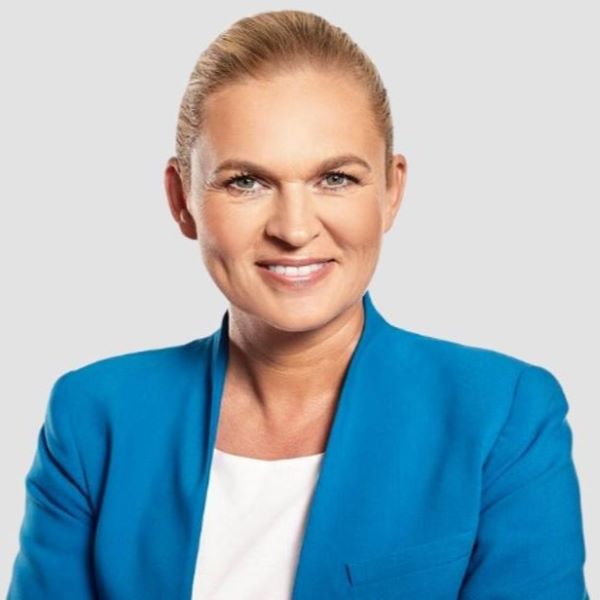
Young people are increasingly falling prey to online disinformation that distorts their perception of critical issues and negatively impacts their mental health. To combat these growing threats, we need to take action at EU level to foster digital and media literacy among younger generations, helping them develop greater resilience to online manipulation and fostering a safer digital environment.
Barbara Nowacka, Polish Minister of Education
In particular, ministers discussed how to better equip young people with the digital skills, critical thinking skills and media literacy needed to assess online content and build resilience to disinformation and manipulation in the digital environment.
They also suggested instruments and actions at EU level that could improve young people’s resilience to online disinformation and manipulation, promote positive and responsible engagement with digital tools, and better prepare them for informed and active democratic participation in the digital age.
EU youth ministers approved Council conclusions on a community of young people in Europe, based on European values for a common and safe Europe.
In line with the Polish presidency’s priorities, the conclusions explore ways to strengthen European identity among young Europeans, in particular by promoting aspects such as education and training on democratic citizenship, digital and media literacy, and community building.
They reflect the outcome of the EU Youth Conference, which took place in Lublin in March as part of the EU Youth Dialogue.
Ministers approved a Council resolution reviewing the guidelines on the governance of the EU Youth Dialogue.
The resolution aims to bring the governance up to date, taking into account developments and lessons learned since the previous review in 2019, within the framework of the EU Youth Strategy 2019-2027.
The following items were dealt with under other business:
Outcome of the discussion at the informal EU Youth Dialogue breakfast meeting (information from the presidency)
The impact of Russia's full-scale invasion on Ukrainian youth (information from the presidency)
Contribution of EU cooperation through youth policy in fostering shared European remembrance and strengthening EU resilience (information from Lithuania, supported by Estonia and Latvia)
Work programme of the incoming presidency (information from Denmark)
Informal breakfast
An informal breakfast meeting took place, entitled “Connected but at what cost? Youth, social media and the future of online well-being”.