- Foreign Affairs Council
Foreign Affairs Council, 17/06/2019, 17 June 2019
Main results
Current affairs
The High Representative and foreign ministers discussed the most pressing issues on the international agenda. They referred to the situation in Venezuela, stressing their concern as the political and humanitarian situation continues to deteriorate. They reiterated their call for a political, negotiated solution within the framework of the Venezuelan constitution that would ultimately lead to free, fair and credible presidential elections and their support for efforts in this direction.
The High Representative and foreign ministers also referred to the Helms-Burton Act, underlining the EU's commitment to protect its businesses and to draw on all appropriate measures to address the effects of the Helms-Burton Act, including in relation to the EU's WTO rights and through the use of the EU blocking statute.
They also discussed the situation in the Republic of Moldova, following the formation of the new government. They reiterated the EU's readiness to work with a reform-committed government, on the basis of the EU-Moldova Association Agreement.
The High Representative also referred to the first anniversary of the Prespa agreement, which was signed by Greece and North Macedonia exactly one year ago.
EU Global Strategy
Foreign and defence ministers discussed the EU Global Strategy on the basis of the third annual progress report by the High Representative: "The EU Global Strategy: three years on, looking forward". They took stock of progress made in the last three years and reflected on future perspectives. The Council also adopted conclusions on EU action to strengthen rules-based multilateralism.
Ministers also focused on security and defence cooperation, and welcomed the substantive progress made to enhance the security of the Union and its role as a security provider and global actor, including through its Common Security and Defence Policy. The Council adopted conclusions on security and defence in the context of the EU Global Strategy.
Common Foreign and Security Policy's effectiveness
Foreign ministers discussed the Common Foreign and Security Policy (CFSP)'s effectiveness. The major shifts underway in the global landscape and the challenges faced by the European Union in today's world call for an even more effective foreign policy. Ministers therefore reflected on practical ideas for enhancing the effectiveness of the EU's Common Foreign and Security Policy (CFSP). They looked in particular at how coherence and consistency could be further increased and reflected on possible ways to strengthen unity and effectiveness.
Sudan
The Council discussed the situation in Sudan and adopted a statement.
Informal lunch on the Middle East
Foreign ministers had an exchange of views with the Foreign Minister of Jordan, Ayman Safadi. They focused on latest developments in the region, including Syria, tensions in the Gulf region, and prospects for the Middle East Peace Process.
A military escalation in the Gulf region would be extremely dangerous, for anyone in the region, for Europe, and for the rest of the world. We call for maximum restraint and de-escalation, as we believe this is in the interest of everybody. Federica Mogherini, High Representative for Foreign Affairs and Security Policy
Meeting files
Preparatory documents
Outcome documents
Press releases
- Sudan: Foreign Affairs Council statement
- 17/06/2019
- Strengthening multilateralism: Council adopts conclusions
- 17/06/2019
- Security and defence: Council adopts conclusions
- 17/06/2019
- Black Sea: Council adopts conclusions
- 17/06/2019
- Central Asia: Council adopts a new EU strategy for the region
- 17/06/2019
- Safe drinking water and sanitation: Council approves EU guidelines
- 17/06/2019
- Maldives: Council revokes sanctions framework
- 17/06/2019
Press information
Press contacts
-
Maria Daniela Lenzu Press officer
- +32 470 88 04 02
- +32 2 281 21 46
If you are not a journalist, please send your request to the public information service.
Accreditation and press events
For general information on accreditation, please visit this page.
Media accreditation for international summits held outside the European Union will be handled by the government authorities of the host country.
Stay tuned
- Sign up for our email alerts to receive updates about this and similar meetings.
- Follow @EUCouncilPress for the latest press updates.
- X hashtag : #FAC
Photos and videos

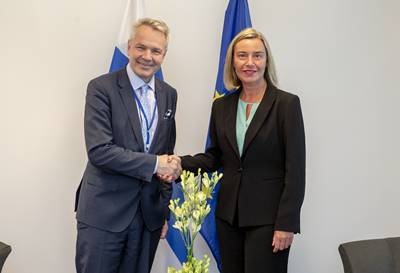
Other meetings: Foreign Affairs Council
Past meetings
Last review: 6 February 2025