We use cookies to improve your browsing experience. Necessary cookies are required to support essential features of the Council's website. Optional cookies help us produce anonymous and aggregated statistical reports to better serve your needs.
With your permission, we will use cookies to produce aggregated, anonymous data about our visitors' browsing and behaviour on our website. We will use this data to improve your experience on our website.
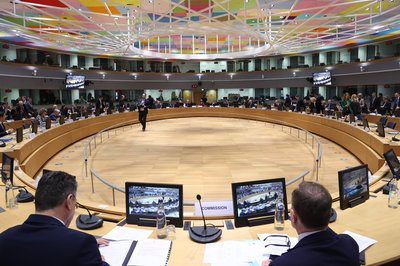
The Council prepared for the special European Council on 9-10 February 2023 by discussing draft conclusions.
At its meeting, the European Council will address Russia’s war of aggression against Ukraine. The discussion will take place following the EU-Ukraine summit on 3 February and almost one year since the start of the war on 24 February 2022. Leaders will take stock of the situation on the ground as well as of the EU and member states’ multifaceted support to Ukraine.
Leaders will also address the economic agenda. They will focus on Europe’s ability to maintain its global competitiveness and the immediate response to the current challenges faced by the European industry.
The European Council will also discuss issues related to migration.
EU-UK relations
Ministers assessed the state of play of the EU-UK relations, focusing on the implementation of the Withdrawal Agreement, in particular the Protocol on Ireland/Northern Ireland.
European Commission Vice President Maroš Šefčovič updated ministers on the ongoing scoping work between the EU and the UK to try and find common solutions to the real-life concerns of all communities in Northern Ireland and protect both Northern Ireland's place in the UK's internal market and the integrity of the EU's Single Market.
Ministers welcomed the ongoing UK-EU engagement aimed at finding joint solutions and expressed their full support to the Commission. They reiterated the EU’s readiness to constructively discuss a negotiated solution within the Protocol to the practical difficulties in implementing it on the ground.
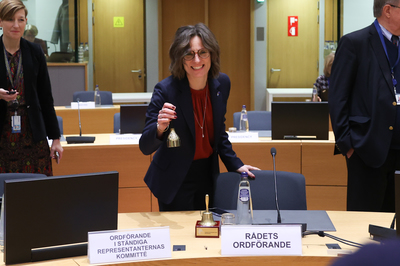
The Swedish Presidency presented its priorities in the first half of 2023.
The main priorities of the Presidency are security, competitiveness, green and energy transitions, democratic values and the rule of law.
As regards the General Affairs Council, the Presidency will take forward work in the various areas under its responsibility, such as rule of law, enlargement and strengthening democracy. The Presidency will also work to bolster the EU’s crisis preparedness and crisis management capabilities, continue with follow-up to the Conference on the Future of Europe and support the Commission’s efforts in the day-to-day implementation of the EU-UK agreements.
An obvious point of departure for our programme has been Russia’s illegal aggression against Ukraine and the EU’s common response to its consequences. In the current geopolitical context, I would like to underline the importance that the Presidency attaches to safeguarding the EU’s fundamental values, which are the foundation of our deep-rooted cooperation in the EU.
Jessika Roswall, Minister for EU Affairs of Sweden
 An obvious point of departure for our programme has been Russia’s illegal aggression against Ukraine and the EU’s common response to its consequences. In the current geopolitical context, I would like to underline the importance that the Presidency attaches to safeguarding the EU’s fundamental values, which are the foundation of our deep-rooted cooperation in the EU.