- Rada ds. Transportu, Telekomunikacji i Energii
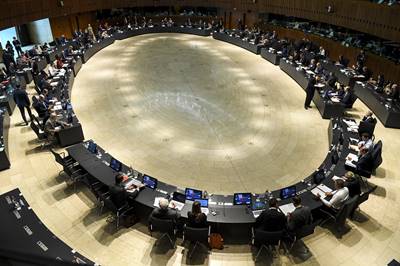
Rada ds. Transportu, Telekomunikacji i Energii (transport), 2 czerwca 2022
W programie
Ministrowie transportu są proszeni o przyjęcie podejścia ogólnego w odniesieniu do trzech aktów wchodzących w skład pakietu „Gotowi na 55”, który ma zmniejszyć unijne emisje gazów cieplarnianych o co najmniej 55% do 2030 r.
Infrastruktura paliw alternatywnych
Redukcja zużycia paliw kopalnych w transporcie jest jednym z kluczowych warunków osiągnięcia przez UE neutralności klimatycznej do 2050 r. Aby ją osiągnąć, UE potrzebuje wystarczającej liczby punktów ładowania lub tankowania samochodów, samolotów i statków.
Rozporządzenie o infrastrukturze paliw alternatywnych wytycza konkretne cele rozwoju takiej infrastruktury na najbliższe lata.
Ministrowie mają przyjąć podejście ogólne względem projektu rozporządzenia.

„Gotowi na 55”: zwiększanie udziału paliw ekologicznych w sektorze lotniczym i morskim (infografika)
Zrównoważone paliwa transportowe
Zrównoważone paliwa transportowe mogą odegrać kluczową rolę w ograniczaniu emisji gazów cieplarnianych. Obecnie sektor lotniczy i morski stosują niemal wyłącznie paliwa kopalne.
Proponowane rozporządzenia mają zapewnić równe warunki konkurencji dla zrównoważonego transportu lotniczego (projekt ReFuelEU Aviation) oraz na polu stosowania odnawialnych, niskoemisyjnych paliw w transporcie morskim (projekt FuelEU Maritime). Oba projekty mają zwiększyć wykorzystywanie zrównoważonych paliw w samolotach i statkach, tak by zmniejszyć ich ślad środowiskowy.
Rada ma uzgodnić podejście ogólne względem obu projektów.
Inteligentne systemy transportu
Rada ma przyjąć podejście ogólne względem nowelizacji dyrektywy o inteligentnych systemach transportowych. Nowe przepisy mają ułatwić fundamentalną transformację europejskiego systemu transportowego, tak by mobilność stała się zrównoważona, inteligentna i wytrzymała.
Niezbędnym czynnikiem tej transformacji jest cyfryzacja. Dzięki niej cały system transportu będzie działał jako spójna, bardziej wydajna całość. Cyfryzacja zwiększy też bezpieczeństwo, niezawodność i komfort transportu.
Statki pasażerskie
Ministrowie mają porozumieć się co do podejścia ogólnego względem lepszych wymogów stateczności dla pasażerskich statków typu ro-ro. Celem są jasne, proste i aktualne ramy prawne, które będzie łatwiej realizować, monitorować i egzekwować. Nowe przepisy mają zwiększyć ogólne bezpieczeństwo statków dokonujących międzynarodowych rejsów.
Transeuropejska sieć transportowa
Ministrowie przeprowadzą wymianę poglądów na temat projektu nowelizacji rozporządzenia o transeuropejskiej sieci transportowej (TEN-T), tak by sformułować wskazówki do dalszej pracy dla organów przygotowawczych Rady.
Celem polityki TEN-T jest bezproblemowy, zrównoważony i wydajny transport w całej Unii, a równocześnie zwiększenie jej spójności społecznej, gospodarczej i terytorialnej.
Ro-ro passenger ships
The Council adopted its general approach on the draft directive on improved stability requirements for ro-ro passenger ships. This proposal, although highly technical in nature, is important for increasing the safety level of these vessels and therefore for better protecting our citizens.
Ro-ro passenger ships operate numerous maritime routes within Member States, between Member States and with third countries. They are therefore of major importance for the mobility of passengers and goods in Europe.
Ministers supported this proposal, which ensures the level of safety of these ships by ensuring, as far as possible, consistency with the international standards for stability of damaged passenger ships, which were recently updated by the International Maritime Organization (IMO) under the 2020 SOLAS Convention. These new international standards must be supplemented in order not to lower the level of the requirements already in force in the Union for new small vessels. For that reason, the text of the Council’s general approach adhered to the logic of the Commission proposal by providing for a level of safety requirements equivalent to existing EU law.
Trans-European transport network (TEN-T)
Ministers held an exchange of views on the draft regulation on the development of the trans-European transport network (TEN-T), based on a progress report. They agreed that the policy on the development of the trans-European transport network is a key instrument of the Union’s transport policy. It must encourage sustainable and more efficient transport of people and goods while also strengthening the EU’s economic, social and territorial cohesion by creating a reliable, high-quality transport system free of physical interruptions, missing links and bottlenecks.
Ministers agreed on the principle of revising the regulation currently in force in order to facilitate the transition to sustainable modes of transport. They supported aligning the development of the TEN-T network with the EU’s climate and sustainable development objectives, strengthening the resilience of the TEN-T network and improving the effectiveness of its governance tools.
Ministers pointed out specific points requiring attention, with questions about certain elements of the Commission proposal, in particular the level of certain requirements and deadlines for implementation.
Underlining the importance of this proposal, which concerns infrastructure development in all EU member states, delegations noted that discussions in the Council have progressed significantly. However, given the scope of the revision, the Council has not yet reached agreement on this legislative proposal and the work of the Council’s preparatory bodies will have to continue.
Situation in Ukraine
Over lunch, ministers exchanged views on the situation in Ukraine following their informal video conference meeting on 8 April in order to provide a coordinated response in the field of transport to Russia’s war of aggression against Ukraine.
Since that meeting, various actions have been carried out at European level: a draft mandate from the Council to the Commission to negotiate an agreement to temporarily liberalise certain road freight operations between the European Union and Ukraine and Moldova has been adopted and should allow the Commission to start negotiations swiftly.
On 12 May, the Commission presented an action plan to help Ukraine export its agricultural products through the establishment of ‘solidarity lanes’ to optimise supply chains and controls between Ukraine and the EU, to establish new transport routes and to avoid bottlenecks. This action plan is based in particular on a platform for exchanges between stakeholders bringing together industry, logistics, representatives of member states and Ukrainian authorities. Short-term measures are also envisaged, including the identification of the logistical capacities available in the EU, as well as medium- and long-term measures to increase the capacity of infrastructure to accommodate larger flows of goods from Ukraine.
On 23 May, the Commission also adopted an emergency plan to strengthen transport resilience in times of crisis, building on experience from the public health crisis (COVID-19) or linked to Russia’s war of aggression against Ukraine. In the form of a toolbox, it is based on 10 measures: adapting legislation to crises; providing adequate financial support; creating green lanes to facilitate road freight transport flows; having a coordinated approach to restrictions on free movement within the EU; maintaining minimum transport links and passenger protection; exchanging information among member states; increasing cybersecurity; introducing emergency tests to check the resilience of the sector; co-operating with international partners.
In the light of these elements, and fully supporting all the initiatives and actions described above, ministers held an exchange of views on the various possibilities to remove obstacles and best implement the commitments made in the field of transport to meet the challenges posed by the war in Ukraine.
Any other business
Under any other business, the presidency briefed ministers on the state of play of the proposed decision on the implementation of the notification of offsetting requirements under the Carbon Offsetting and Reduction Scheme for International Aviation (CORSIA) for aircraft operators established in the EU. The Permanent Representatives Committee endorsed a mandate for negotiations with the European Parliament at its meeting on 20 May 2022.
The Dutch and Austrian delegations presented the second progress report on the platform on international rail passenger transport.
The Danish delegation expressed concerns about developments in the road freight transport sector in view of the strong growth in the number of driver attestations for third-country drivers.
-
Obecnie tylko w następujących językach:
In addition, the Polish delegation presented a joint statement by nine member states (Bulgaria, Czechia, Estonia, Hungary, Latvia, Lithuania, Poland, Slovakia and Romania) on the actions needed at European level to enable the continuation and completion of infrastructure investments.
Moreover, the Greek delegation informed about the illegal seizure of two-Greek flagged vessels by Iranian armed groups in the Persian Gulf.
-
Obecnie tylko w następujących językach:
As the last item, the incoming Czech presidency presented its work programme for the second half of 2022.

„Gotowi na 55”: bardziej zrównoważony transport (infografika)
Dokumenty
Dokumenty przygotowawcze
Komunikaty prasowe
Prasa
Kontakt z prasą
Osoby niebędące dziennikarzami prosimy o kontakt z Sekcją Informacji Publicznej.
Akredytacja i wydarzenia prasowe
Szczegóły akredytacji znajdują się na tej stronie.
Udzielaniem akredytacji prasowej na szczyty międzynarodowe odbywające się w krajach spoza Unii Europejskiej będą zajmowały się organy rządowe tych krajów.
Bądź na bieżąco
- Zamów alerty mejlowe o tym i podobnych posiedzeniach.
- Obserwuj @EUCouncilPress z aktualnościami prasowymi.
- Hasztag na X: #TTE
Zdjęcia i wideo

Pozostałe posiedzenia: Rada ds. Transportu, Telekomunikacji i Energii
Minione posiedzenia
Ostatnia aktualizacja: 16 stycznia 2025
