We use cookies to improve your browsing experience. Necessary cookies are required to support essential features of the Council's website. Optional cookies help us produce anonymous and aggregated statistical reports to better serve your needs.
With your permission, we will use cookies to produce aggregated, anonymous data about our visitors' browsing and behaviour on our website. We will use this data to improve your experience on our website.
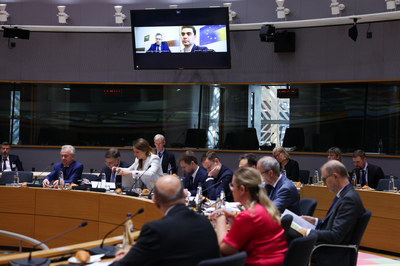
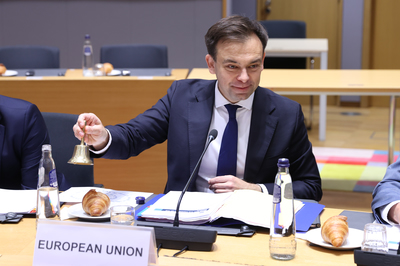
Economic and Financial Affairs Council, 13 May 2025
Main results
SAFE
The Council held a policy debate on the proposed Security Action for Europe (SAFE) instrument. Ministers stressed the urgent need for supporting the European defence industry and discussed the budgetary and economic aspects of the financial assistance provided by the SAFE instrument.
We need to unlock €150 billion in attractive loans for defence investment as a matter of priority. The Polish presidency aims to adopt the SAFE regulation as soon as possible. Security cannot be bought, it has to be built!
Andrzej Domanski, Polish minister for finance
SAFE is a new financial instrument to help member states increase expenditure on common defence procurement through financial assistance of up to €150 billion in loans to member states.
This common procurement approach will benefit member states and industry alike, as it will help increase economies of scale, reduce costs and enhance interoperability of systems and components.
The proposal is currently being discussed in the Council’s preparatory bodies. The presidency aims to have the proposal adopted as soon as possible.
The Council reached a general approach on the directive on VAT rules for distance sales of imported goods and import valued added tax (VAT). The Council will now consult the European Parliament on the text before formally adopting it.
The new rules will improve the collection of VAT on imported goods by making the suppliers liable for the VAT paid on import. This will give them an extra incentive to use the VAT import one-stop-shop (IOSS) for all VAT obligations.
The IOSS portal serves as a point of contact for the import of goods from third countries into the European Union. Its goal is to simplify the declaration and payment of value added tax when importing goods into the EU.
Ministers discussed competitiveness and regulatory simplification and how to improve Europe’s business environment. The focus of this agenda item was on the savings and investments union (SIU). The Commission adopted the SIU strategy on 19 March 2025. It is part of the EU’s efforts to bolster its competitiveness and to foster economic growth by mobilising private capital.
At today’s meeting the Commission presented the SIU to ministers who exchanged views on the strategy. Ministers shared the SIU’s objective of mobilising private capital. The importance of completing the single market for capital was underlined as a requisite to tap into these private funding sources and channel them into productive investments in the EU.
Ministers shared their views on the state of play of the economic and financial impact of Russia’s aggression against Ukraine. This is a recurring item on the agenda of ministers of finance and economic affairs. The focus of the exchange, based on a presentation of the Stockholm Institute of Transition Economics, was on the real situation of Russia’s economy.
The Commission also gave an update about the implementation of the EU’s support of Ukraine. A dedicated Ukraine Facility offers up to €50 billion in stable and predictable financial support from 2024 to 2027. The EU also provides €18.1 billion Macro-Financial Assistance (MFA) loans as part of a €45 billion EU and G7initiative, which is expected to be repaid from the revenues stemming from the immobilisation of the reserves of Central Bank of Russia in the EU.
The presidency and Commission debriefed the Council on the main outcomes of the G20 Finance and Central Bank Governors meeting, which took place on 23 and 24 April, and the IMF/World Bank Group spring meetings.
The Council adopted implementing decisions approving targeted amendments submitted by the Netherlands, Portugal, Slovakia and Spain to their recovery and resilience plans (RRP). These plans allow member states to benefit from the RRF – the EU’s large-scale financial support programme in response to the challenges the COVID-19 pandemic has posed to the European economy.
To date, the EU has disbursed more than €311 billion from the facility to member states.
An annual economic and financial dialogue with regional partners took place in the margins of the Council meeting.
The current and two incoming presidencies (Poland, Denmark and Cyprus) as well as the Commission, the ECB, the Western Balkans partners, Türkiye, Moldova and Ukraine as an observer discussed economic developments, challenges and policy plans.
Participants of the dialogue adopted joint conclusions with targeted policy guidance for each participating partner.