We use cookies to improve your browsing experience. Necessary cookies are required to support essential features of the Council's website. Optional cookies help us produce anonymous and aggregated statistical reports to better serve your needs.
With your permission, we will use cookies to produce aggregated, anonymous data about our visitors' browsing and behaviour on our website. We will use this data to improve your experience on our website.
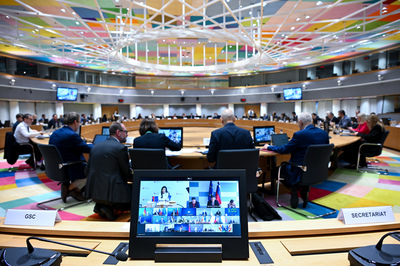
Informal video conference of transport ministers, 21 April 2026
Main results
EU transport ministers met for an informal video conference in light of the developments in the Middle East. Ministers exchanged views on how to mitigate the impact of the crisis and ensure the stability and resilience of transport systems across the EU.
While the EU’s security of supply remains stable for now, high energy prices are placing growing pressure on the EU’s transport sector and system. Today’s exchange will contribute to swift, practical proposals for a strong and coherent European response. Through coordination and solidarity, Europe will meet this challenge.
Alexis Vafeades - Minister for transport of the Republic of Cyprus
The rising cost of fuel puts pressure on transport operators, many of whom already work with narrow margins. Increased energy costs affect demand and lead to higher costs being passed on to both passengers and freight, disrupting global cargo flows and the functioning of the EU single market.
Today's meeting focused on several key areas, including:
the impact of the crisis on various transport modes
EU-wide coordination to avoid fragmentation and ensure a coordinated response to the crisis
priority measures to ensure fuel supply continuity and enhance the resilience of transport systems.
Although the EU is currently not facing immediate fuel shortages, ministers highlighted that price volatility is a growing challenge. Rising fuel prices are particularly affecting road transport and aviation. Ministers agreed that monitoring of fuel stocks, especially jet fuel, is critical to tracking developments and preparing for any potential supply disruptions.
Ministers also expressed strong support for the European Commission’s upcoming publication of a temporary toolbox aimed at addressing high energy prices and potential fuel supply issues. They suggested targeted, temporary measures such as state aid or regulatory flexibility, provided these are proportionate, maintain a level playing field, and do not disrupt the EU’s single market.
The Council further emphasised the importance of aligning these short-term responses with the EU’s long-term goals, particularly reducing dependence on fossil fuels, the acceleration of electrification, and the transition to alternative fuels.