We use cookies to improve your browsing experience. Necessary cookies are required to support essential features of the Council's website. Optional cookies help us produce anonymous and aggregated statistical reports to better serve your needs.
With your permission, we will use cookies to produce aggregated, anonymous data about our visitors' browsing and behaviour on our website. We will use this data to improve your experience on our website.
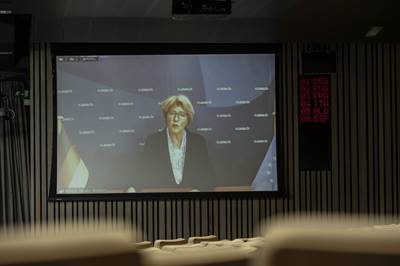
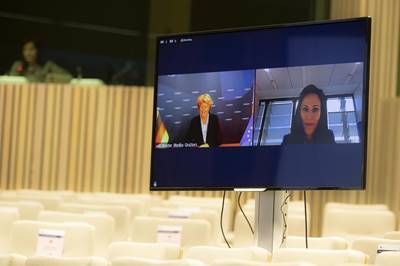
Video conference of culture and audiovisual ministers, 1 December 2020
Main results
Preparing for the future - Recovery of the culture and media sector from the COVID-19 pandemic
Ministers exchanged views on how to reinforce the long-term resilience of the culture and media sector and how the creative industries, and the media can benefit from the EU recovery funds and receive adequate information on funding opportunities.
The cultural and media sectors have been hit extremely hard by the COVID-19 crisis. Our discussion today confirmed member states' determination to continue supporting them at national and EU level - better targeting of recovery aid, adequate information on funding and flexible approach towards travel restrictions. Further to that, European Capitals of Culture initiative was adapted to help the cities affected by the pandemic and we expect that the funding through the Creative Europe programme will increase as of 2021.
Monika Grütters, Federal Government Commissioner for Culture and the Media
Ministers shared their views in relation to the following points:
The European recovery measures have to be targeted at those concerned in the cultural and creative sector, including the media, to help them to prepare for future challenges in a sustainable and resilient way. The sector has to continue to contribute to the integration of Europe! We want to further strengthen European funding programmes, and ensure that the cultural and media sector is better informed about them. This requires sustainable measures which will need to be discussed
We want to offer prospects for the future of the cultural and media sector, especially since the massive impacts of the pandemic will continue for a longer period of time. How can we improve the legal framework for the benefit of culture and the media, for example with regard to travel restrictions? We want to make sure that our sector benefits from the possibilities offered by the Recovery and Resilience Facility when it is implemented at the national level
Ministers welcomed the fact that the budget of the Creative Europe programme will be substantially increased for the period 2021-2027. They also welcomed the prospect for an increased budget of the Erasmus+ and Horizon Europe programmes for the next 7-year period and the opportunities this can provide for supporting the cultural and creative industries. Ministers expressed hope that an agreement on the next multi-annual financial framework (MFF) and the Recovery and Resilience Facility will soon be reached as this will allow for an additional funding for the cultural and audiovisual sectors.
The majority of delegations expressed support for the idea to create an internet portal containing accessible and targeted information on funding opportunities for artists and creators across the EU. This would help to overcome difficulties, such as insufficient information and complexity of application procedures.
Ministers broadly agreed on the need for synergies between the Creative Europe programme and other EU programmes or funds with strands dedicated to cultural and creative activities, such as Erasmus+, Horizon Europe, Digital Europe and the European Regional Development Fund.
Among the suggestions to help the recovery of the cultural, creative and media industries were strengthening the EU legal framework, in particular the implementation of the EU copyright directive and the audiovisual media services directive, introducing lower taxes on the sales of books, and creating online platforms providing European audiovisual products.
Many ministers called for exceptions from travel restrictions for artists and creators across the EU.
The presidency informed ministers about the nomination of the German city of Chemnitz as one of the European Capitals of Culture in 2025. The Slovenian delegation informed about the state of play of the process of nominating the second city (in Slovenia) to host the title in 2025. Ministers welcomed the fact that the European Capitals of Culture action has been provided with certain flexibility to the benefit of the cities experiencing the negative impact from the COVID-19 pandemic.
 The cultural and media sectors have been hit extremely hard by the COVID-19 crisis. Our discussion today confirmed member states' determination to continue supporting them at national and EU level - better targeting of recovery aid, adequate information on funding and flexible approach towards travel restrictions. Further to that, European Capitals of Culture initiative was adapted to help the cities affected by the pandemic and we expect that the funding through the Creative Europe programme will increase as of 2021.