We use cookies to improve your browsing experience. Necessary cookies are required to support essential features of the Council's website. Optional cookies help us produce anonymous and aggregated statistical reports to better serve your needs.
With your permission, we will use cookies to produce aggregated, anonymous data about our visitors' browsing and behaviour on our website. We will use this data to improve your experience on our website.
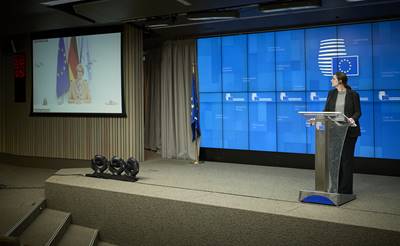
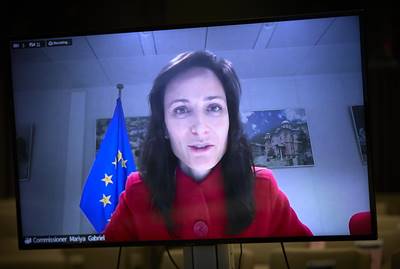
Video conference of education ministers, 30 November 2020
Main results
Solidarity for the victims of terrorist attacks in Europe
To mark their commitment to freedom of expression and European values, ministers expressed solidarity with the victims of recent terrorist attacks in Europe.
European Education Area
Ministers held a debate on the goals and priorities of the cooperation in education and training among member states in order to achieve a European Education Area by 2025.
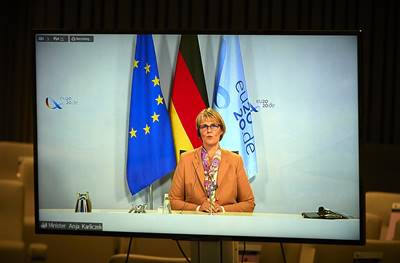
During the pandemic, education and training systems across the EU have been put to the test. New ways of learning and teaching have gained ground. Education professionals, pupils and students need to adapt to the new situation. Member states are therefore strongly committed to building resilient education and training systems. Achieving the European Education Area by 2025 remains a priority and cooperation among member states will be crucial. We must continue to invest in education and training in order to support EU’s recovery and to achieve a more inclusive, resilient and sustainable European society and economy.
Anja Karliczek, German Federal Minister of Education and Research
The debate was titled Shaping the European Education Area and the next strategic framework for European cooperation in education and training - the way forward. Ministers' discussion was structured around the following questions:
taking into account the overall objective of achieving the European Education Area by 2025, what are in your view the most relevant strategic goals and priority issues that the Member States cooperation in the field of education and training should focus on in the next 5 to 10 years?
against this background, how do you see the five proposed EU-level targets to be reached by 2030?
Ministers confirmed the member states' support for the European Education Area and its main goals and welcomed the Commission communication 'Achieving the European Education Area by 2025' published on 30 September 2020. They identified some open questions, such as the governance mechanism of the European Education Area and the Union level targets proposed to be reached by 2030.
Many ministers called for a continuity in relation to the current governance structure and shared the view that national competences need to be respected. Delegations also argued that existing and tested cooperation mechanisms, such as those within the framework of the Bologna process, have to continue to function.
Ministers also highlighted the importance to create and use synergies between programmes and initiatives, such as the European Research Area and the European Skills Agenda.
Ministers showed broad consensus on the need to put the upskilling and training of teachers and educators at the heart of the efforts to build the European Education Area. Some delegations suggested to offer a better career prospects to teachers and educators and to find ways to ensure the attractiveness of the teaching profession.
On the EU level targets set in the Commission communication and proposed to be reached by 2030, many ministers insisted on taking into account national circumstances and specificities, and called for the development of indicators which would take into account the diversity of national educational systems.
Quality of education, enhanced language learning, increased mobility, gender equality and mutual recognition of qualifications were among the priorities mentioned in order to successfully build the European Education Area.
Council recommendation on vocational education and training (VET) for sustainable competitiveness, social fairness and resilience
Council conclusions on digital education in Europe's knowledge societies
Ministers received an updated information about the state-of-play in EU member states, EFTA and EEA countries in coping with COVID-19 in education and training.
The incoming Portuguese presidency of the Council presented its priorities in the area of education.
 During the pandemic, education and training systems across the EU have been put to the test. New ways of learning and teaching have gained ground. Education professionals, pupils and students need to adapt to the new situation. Member states are therefore strongly committed to building resilient education and training systems. Achieving the European Education Area by 2025 remains a priority and cooperation among member states will be crucial. We must continue to invest in education and training in order to support EU’s recovery and to achieve a more inclusive, resilient and sustainable European society and economy.