Fisheries
Learn about EU rules for sustainably managing fish stocks and preventing overfishing.
Fish resources are limited, and overfishing can impact a stock's survival. The EU has set rules to ensure the sustainability of oceans and of the fishing and aquaculture industry.
The goal of the EU's common fisheries policy is to make fish available to consumers at reasonable prices, helping keep the fisheries sector strong.

The goals of the EU's fisheries policy
Under its common fisheries policy the EU regulates fishing and aquaculture activities, sets fishing quotas, and safeguards fisheries and oceans.

Preserve stocks
Avoiding overfishing and ensuring fish stocks’ reproductive capacity.

Keep the industry competitive
Enabling the conditions for a profitable fishing and aquaculture sector.

Share opportunities
Setting fair fishing quotas among EU countries.

Conserve marine ecosystems
Preserving oceans, species and their habitats.
How fish stocks are managed
The EU sets limits on how many fish can be caught to safeguard fishing resources. This is crucial for a viable EU fishing sector. Catch limits are defined every year for over 200 commercial species in line with independent scientific advice.
In addition, the EU adopts multiannual plans for specific sea areas to ensure long-term conservation. Measures to tackle illegal fishing also help limit damage to marine ecosystems.

Setting fishing quotas among EU countries
The Council plays an important role in setting catch limits ('total allowable catches' or 'TACs') and national quotas for EU fish stocks, since this is an area where it has sole responsibility for adopting the legislation.
- Consultation and proposal: the Commission presents a proposal for catch limits based on scientific advice.
- Negotiations: representatives of EU countries analyse and discuss the proposal in the Council’s Working Party on Fisheries Policy.
- Agreement: ministers of the EU countries agree on the catch limits and quotas within the Agriculture and Fisheries Council.
- Adoption: the agreement is formally adopted by the Council and becomes law.
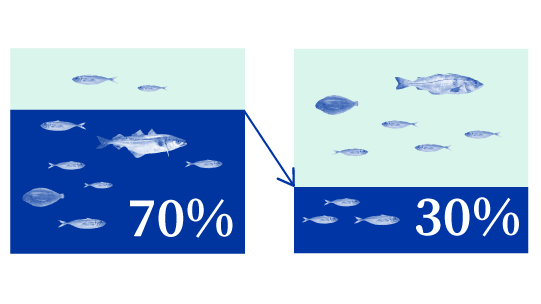
Overfishing down compared to 20 years ago
Thanks to fisheries policy and its measures to make fishing more sustainable, fish stocks are recovering. In 2003, seven in every ten stocks were overfished, whereas in 2022 overfishing affected only three in ten stocks. This is a 40 percentage point decrease in overfishing in about 20 years.
While this data shows the positive impact of EU rules on the health of fish stocks, overfishing remains a challenge. The status of fish stocks in the Mediterranean, Black and Baltic seas in particular remains critical and requires further action.
International agreements
The EU has concluded agreements with partners globally to manage and share fish resources. Through these agreements, EU vessels get access to partner countries' waters and their fish stocks.
The United Kingdom is the main partner, as around 100 fish stocks are shared by the EU and the UK.
Latest explainers

Organic farming

Post-Brexit agreements

The common agricultural policy explained
Last review: 28 July 2026
