We use cookies to improve your browsing experience. Necessary cookies are required to support essential features of the Council's website. Optional cookies help us produce anonymous and aggregated statistical reports to better serve your needs.
With your permission, we will use cookies to produce aggregated, anonymous data about our visitors' browsing and behaviour on our website. We will use this data to improve your experience on our website.
Economic and Financial Affairs Council, 17 February 2026
Main results
Savings and Investments Union
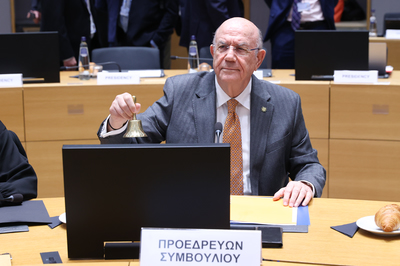
From the outset, the Cyprus presidency made a more competitive Europe a central pillar of its agenda. As last week’s meeting of EU leaders showed, this political impetus is shared across member states. The savings and investment union, including the pensions package we discussed today, are key tools to boosting flows of capital and helping us to achieve a strong, innovative and economically vibrant Europe.
Makis Keravnos, Minister of Finance of the Republic of Cyprus
Ministers exchanged views on the supplementary pensions package – a key element of the savings and investment union. The package aims at contributing to improved retirement income for citizens while boosting the EU’s competitiveness.
More specifically, the package amends the pan European personal pension product (PEPP) regulation and the institutions for occupational retirement provisions directive.
The reform should make supplementary pensions more attractive and accessible to EU citizens and at the same time contribute to the financing of the economy.
During their discussion, ministers voiced general support for the Commission’s proposals to improve the EU’s supplementary pension framework. They highlighted in particular the potential of the package in ensuring adequate retirement for EU citizens, mobilising long-term private savings that can help boost investment in the EU and supporting the sustainability of the wider economy.
At the same time, ministers stressed the need to respect member state competences, such as in the area of social and labour law. They also underlined the need for proportionality for smaller market actors and asked for clarifications on the proposed inclusion in national frameworks of a non-discriminatory tax treatment provision for PEPPs.
Work on the package will now continue at both technical and political levels. The Cyprus presidency will seek to identify common ground while taking into account the wide diversity of national pensions systems among member states.
The Council decided to activate the national escape clause (NEC) under the stability and growth pact (SGP) for Austria. The measure will help Austria transition to higher defence spending at national level while ensuring debt sustainability.
The NEC allows a member state to temporarily deviate from budgetary requirements in response to exceptional circumstances outside their control, while ensuring debt sustainability. Member states can therefore run higher deficits without being considered in breach of the fiscal rules set out in the SGP.
The clause covers a period of four years and a maximum of 1.5% of GDP in flexibility. Today’s decision brings to 17 the number of EU member states who have availed of the NEC with a view to boosting their national spending on defence.
As a non-discussion item, the Council decided to add two countries - Turks and Caicos Islands and Viet Nam – to the EU list of non-cooperative jurisdictions for tax purposes.
The list is the EU’s tool topromote tax good governance worldwide.. It is composed of countries which fail to comply with agreed international tax standards or did not fulfil their commitments on tax good governance within a specific timeframe.
The Council also removed three countries - Fiji, Samoa and Trinidad and Tobago - from the list. These jurisdictions now comply with all criteria under the process.
Following today’s update, the list now consists of 10 jurisdictions:
American Samoa
Anguilla
Guam
Palau
Panama
Russia
Turks and Caicos Islands
US Virgin Islands
Vanuatu
Viet Nam
The Council also approved the usual state of play document (Annex II) which reflects ongoing EU cooperation with its international partners and the commitments of these countries to reform their legislation to adhere to agreed tax good governance standards.
The Council approved the 2026 Council recommendation on the economic policy of the euro area.
The recommendation addresses key issues for the functioning of the euro area. The aim is to better integrate the national and euro-area dimensions of EU economic governance.
The European Council will be invited to endorse the recommendation at its March meeting. After that, the Council will be able to proceed with its formal adoption.
The Council approved its guidelines for the EU’s annual budget for 2027, which provide a political steer to the Commission in preparing the draft proposal for next year’s budget. This will be the final annual budget cycle of the EU’s multiannual financial framework (MFF) 2021-2027.
Among other considerations, the Council’s guidelines insist that the budget for 2027 should be realistic, in line with actual needs, ensure prudent budgeting and leave sufficient margins under MFF ceilings to deal with unforeseen circumstances and to address the EU’s challenges.
The Council also adopted a recommendation on the discharge to be given to the Commission for the implementation of the EU general budget for 2024, to be forwarded to the European Parliament.
The Council adopted an implementing decision approving targeted amendments submitted by Lithuania to its recovery and resilience plan.
The RRF is the EU’s large-scale financial support programme in response to the challenges the COVID-19 pandemic has posed to the European economy. It is the centrepiece of NextGenerationEU, a temporary recovery instrument that allows the Commission to raise funds to help repair the immediate economic and social damage caused by the pandemic.
To benefit from the facility, member states must submit recovery and resilience plans (RRPs) to the Commission, setting out the reforms and investments they intend to implement by the end of August 2026.
To date, around €394 billion has been disbursed from the RRF.