We use cookies to improve your browsing experience. Necessary cookies are required to support essential features of the Council's website. Optional cookies help us produce anonymous and aggregated statistical reports to better serve your needs.
With your permission, we will use cookies to produce aggregated, anonymous data about our visitors' browsing and behaviour on our website. We will use this data to improve your experience on our website.
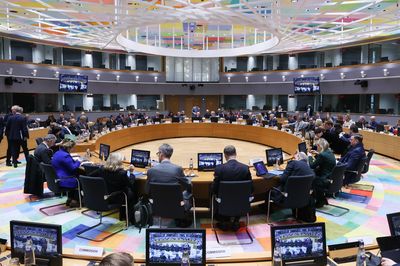
Economic and Financial Affairs Council, 20 January 2026
Main results
Presidency work programme
The Cyprus presidency presented its work programme for the first semester of the year in the field of economic and financial affairs.
At this critical juncture, boosting the EU’s financial autonomy and reinforcing its global economic position will be the guiding principles of the Cyprus Presidency in steering ECOFIN’s agenda. We want to create momentum towards a thriving, more competitive Europe. And let me very clear: we will work to ensure that EU support for Ukraine – including financial support - remains unwavering.
Makis Keravnos, Minister of Finance of Cyprus
In particular, the presidency reiterated its commitment to advancing legislative work on the savings and investment union (SIU), the EU tax decluttering and simplification agenda, and making progress towards a modernised customs union, among other initiatives.
The Council opened an excessive deficit procedure (EDP) concerning Finland. It also adopted a recommendation to Finland outlining the net expenditure path and timeline that should be followed to put an end to its excessive deficit by 2028.
The Council’s decision to open an EDP today is warranted given Finland’s 4.4% budget deficit in 2024 and planned budget deficit of 4.3% in 2025.
In its recommendation, the Council stipulates that Finland should therefore take effective action and present by 30 April 2026 the necessary measures to reduce its deficit. Finland should also ensure that its nominal cumulative net expenditure growth rate does not exceed 2.5% in 2026, 4.1% in 2027 and 5.9% in 2028.
The EDP mechanism is designed to ensure that EU member states return to or maintain discipline in their governments’ budgets. Procedures are launched when a member state runs a government deficit exceeding the Treaty reference value of 3% of GDP.
Ministers approved Council conclusions on the 2026 alert mechanism report, published by the Commission on 25 November 2025.
The 2026 alert mechanism report initiates the European semester’s annual macroeconomic imbalance procedure.
The procedure aims to identify, prevent and address the emergence of potentially harmful macroeconomic imbalances that could adversely impact economic stability in a particular member state, the euro area, or the EU as a whole.
In its conclusions, the Council broadly agrees with the report’s assessment regarding the evolution of macroeconomic imbalances and emerging risks. The conclusions also call for further work to effectively and efficiently implement the macroeconomic imbalance procedure, and for member states to continue addressing vulnerabilities in this area.
In this year’s report, no new countries have been identified as requiring an in-depth review. As a result, the Council will continue to monitor the situation in the seven countries identified in 2025 as experiencing imbalances. The in-depth reviews will be published in spring 2026, ahead of the European semester spring package.
The Council adopted implementing decisions approving targeted amendments submitted by Finland, Ireland, Netherlands, Spain, Germany and Sweden to their recovery and resilience plans.
The RRF is the EU’s large-scale financial support programme in response to the challenges the COVID-19 pandemic has posed to the European economy. It is the centrepiece of NextGenerationEU, a temporary recovery instrument that allows the Commission to raise funds to help repair the immediate economic and social damage caused by the pandemic.
To benefit from the facility, member states must submit recovery and resilience plans (RRPs) to the Commission, setting out the reforms and investments they intend to implement by the end of August 2026.
To date, around €393 billion has been disbursed from the RRF.
As a non-discussion item, the Council today formally decided to provide a further €500 million in macro-financial assistance (MFA) to Jordan.
The EU assistance will help bolster Jordan’s economic stability and support its ongoing reform agenda in the face of mounting internal and external challenges. It aims to support the restoration of a sustainable external financing situation for the country, thereby supporting its economic and social development.
The assistance, provided in response to Jordan’s request for additional support in January 2025, will be available for two and a half years and provided in the form of long-term loans, disbursed in three instalments.
Disbursement of instalments will be strictly linked to Jordan’s progress with the reforms outlined in a memorandum of understanding to be agreed between Jordan and the Commission.