We use cookies to improve your browsing experience. Necessary cookies are required to support essential features of the Council's website. Optional cookies help us produce anonymous and aggregated statistical reports to better serve your needs.
With your permission, we will use cookies to produce aggregated, anonymous data about our visitors' browsing and behaviour on our website. We will use this data to improve your experience on our website.
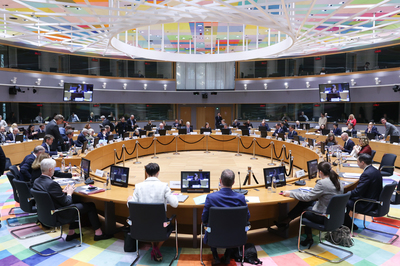
Ministers responsible for European affairs continued preparations for the December 2025 European Council by discussing draft conclusions. The Council discussed the new Multiannual Financial Framework (MFF) 2028-2034 and took stock of progress on EU enlargement. The Commission presented its simplification, implementation and enforcement reports for 2025, and ministers held an exchange of views. The Council approved the joint declaration on EU legislative priorities for 2026. The Danish presidency and the upcoming Cyprus presidency presented the roadmap for the 2026 European semester.
During the Danish presidency, we made good progress on a simpler, more flexible and more effective multiannual financial framework 2028-2034. We have also moved forward the EU’s simplification agenda to boost EU competitiveness and make life easier for our businesses and citizens. And we have made progress on the enlargement agenda – especially with Ukraine, Moldova, Albania and Montenegro. Unfortunately, it was not possible to adopt Council conclusions due to one member state blocking but 26 member states have sent a clear and strong signal on the way forward for all aspiring members. We are now passing the baton to the Cyprus presidency to continue this work in our common effort to effectively address the big geopolitical challenges the EU is currently facing.
Marie Bjerre, Minister for European affairs of Denmark
December European Council preparation
The Council continued preparations for the European Council meeting of December 2025 by discussing draft conclusions. Leaders are expected to discuss:
The Council held a fourth policy debate on the EU’s MFF for 2028-2034.
The exchange of views focused on the first negotiating box. This document, prepared under the responsibility of the Danish presidency, aims to identify elements for political consideration and facilitate their discussion by EU leaders (without figures) ahead of the December 2025 European Council. The negotiating box should also form the basis for future negotiations between member states at technical level.
The Council also took note of progress reports on the MFF, the draft regulation establishing the European Competitiveness Fund, the draft regulation on national and regional partnership plans (NRPPs) and the draft regulation establishing the ‘Global Europe’ instrument.
Ministers exchanged views on the EU enlargement policy. The Council took stock of progress made on the enlargement process and the presidency issued conclusions politically supported by 26 member states that set out political priorities, assess the situation in each of the EU’s partners and set out guidelines for further reforms.
Following discussions at the General Affairs Council of 17 November 2025, the Council approved a joint declaration on the EU legislative priorities for 2026 with the accompanying list of priority proposals. The presidents of the three institutions (Council of the EU, European Parliament, European Commission) will be invited to sign this joint declaration on the margins of the upcoming December European Council meeting.
Reports on simplification, implementation and enforcement
The Commission presented its annual overview report on simplification, implementation and enforcement, as well as the annual progress reports on simplification, enforcement and implementation regarding enlargement and the Eastern Neighbourhood and in the field of cohesion and reforms. Ministers held an exchange of views on these reports.
The Danish presidency and the incoming Cyprus presidency presented the roadmap for the 2026 European Semester. The roadmap is divided into two phases: the first covers, in detail, the period up to the March European Council, and the second, more indicative, covers the period between the European Council meetings in March and June 2026. The European Semester annual cycle began this year on 25 November, when the Commission presented its Autumn Package, calling on member states to take action to enhance Europe's competitiveness, productivity, and innovation.
The French, Irish and Spanish delegations informed the Council about an EU strategy for the Macro-Atlantic Region (EUSMAR).
Over an informal lunch, ministers discussed the contribution of EU’s cohesion policy to EU’s strategic priorities.
The Council also adopted without discussion a decision authorising the Commission to start negotiations with the US about a framework agreement for the reciprocal exchange of information for security and identity verification relating to border procedures and visa applications. This framework agreement – once negotiated – would function as the legal backdrop for member states’ bilateral negotiations with the US on information exchange agreements. These EU-level and national agreements are taking place in the context of US efforts to conclude ‘enhanced border security partnerships’ with countries participating in the US visa waiver programme.
Regarding accountability, the Council adopted a decision on the signing of the Convention establishing the International Claims Commission for Ukraine. This Commission is an administrative body that reviews, assesses, and decides on claims for compensation of damage, loss or injury caused by internationally wrongful acts committed by the Russian Federation in or against Ukraine since the start of the Russian war of aggression against Ukraine.