Σχέσεις της ΕΕ με τον Ευρωπαϊκό Οικονομικό Χώρο
Ο Ευρωπαϊκός Οικονομικός Χώρος (ΕΟΧ) επεκτείνει την ενιαία αγορά της ΕΕ στην Ισλανδία, το Λιχτενστάιν και τη Νορβηγία, καθιστώντας δυνατή την ελεύθερη κυκλοφορία αγαθών, υπηρεσιών, ανθρώπων και κεφαλαίων, προωθώντας παράλληλα τη στενή πολιτική και οικονομική συνεργασία.
Τι είναι ο Ευρωπαϊκός Οικονομικός Χώρος;
Ο Ευρωπαϊκός Οικονομικός Χώρος (ΕΟΧ) ιδρύθηκε τον Ιανουάριο του 1994, μέσω συμφωνίας που ενώνει τα κράτη μέλη της Ευρωπαϊκής Ένωσης και τις χώρες της Ευρωπαϊκής Ζώνης Ελεύθερων Συναλλαγών (ΕΖΕΣ) σε μια ενιαία εσωτερική αγορά.
Μέλη ΕΟΧ
Ο Ευρωπαϊκός Οικονομικός Χώρος αποτελείται από 30 χώρες: τα 27 κράτη μέλη της ΕΕ και τρεις χώρες της ΕΖΕΣ.
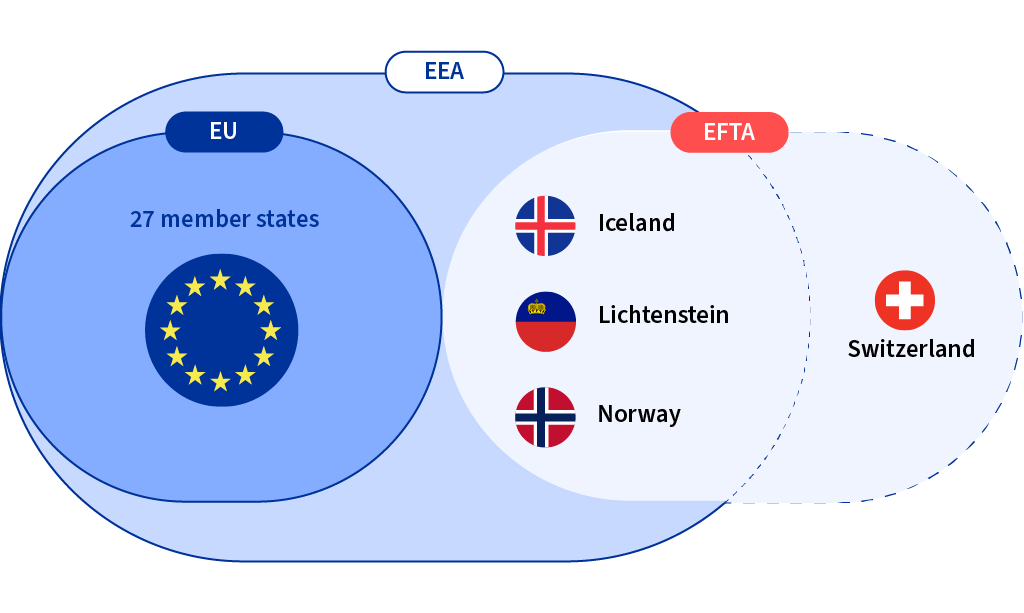
Ενώ η ΕΖΕΣ αποτελείται από τέσσερις χώρες (Ισλανδία, Λιχτενστάιν, Νορβηγία και Ελβετία), η Ελβετία δεν ανήκει στον Ευρωπαϊκό Οικονομικό Χώρο. Οι Ελβετοί ψηφοφόροι απέρριψαν τη συμμετοχή τους στον ΕΟΧ σε δημοψήφισμα τον Δεκέμβριο του 1992. Οι σχέσεις της ΕΕ με την Ελβετία διέπονται από μια σειρά από διακριτές συμφωνίες.
Οφέλη
Ο Ευρωπαϊκός Οικονομικός Χώρος ωφελεί τόσο τα άτομα όσο και τις επιχειρήσεις, επεκτείνοντας την εσωτερική αγορά της ΕΕ στην Ισλανδία, το Λιχτενστάιν και τη Νορβηγία. Η συμφωνία για τον ΕΟΧ εξασφαλίζει ίσα δικαιώματα και υποχρεώσεις στο πλαίσιο της ενιαίας αγοράς για τους πολίτες και τους οικονομικούς φορείς εντός του ΕΟΧ.
Για τους πολίτες, ο ΕΟΧ στηρίζει την ελεύθερη κυκλοφορία των ανθρώπων, διευκολύνοντας τη διαβίωση, την εργασία, τις σπουδές και τη σύσταση επιχείρησης σε όλες τις συμμετέχουσες χώρες, με την επιφύλαξη των εφαρμοστέων κανόνων.
Για τις επιχειρήσεις, ο ΕΟΧ παρέχει πρόσβαση σε μια μεγαλύτερη αγορά που διέπεται από ένα κοινό σύνολο κανόνων, διευκολύνοντας το εμπόριο αγαθών και υπηρεσιών και δημιουργώντας πιο προβλέψιμες συνθήκες για τη διασυνοριακή οικονομική δραστηριότητα.
Παρεκκλίσεις
Η συμφωνία για τον ΕΟΧ δεν καλύπτει τις ακόλουθες πολιτικές της ΕΕ:
- κοινή γεωργική και αλιευτική πολιτική
- τελωνειακή ένωση
- κοινή εμπορική πολιτική
- κοινή εξωτερική πολιτική και πολιτική ασφαλείας
- δικαιοσύνη και εσωτερικές υποθέσεις (ωστόσο, τα κράτη ΕΟΧ-ΕΖΕΣ ανήκουν στον χώρο Σένγκεν)
- άμεση και έμμεση φορολογία
- οικονομική και νομισματική ένωση
Ποιοι κανόνες διέπουν τον Ευρωπαϊκό Οικονομικό Χώρο;
Ο ΕΟΧ βασίζεται σε μια θεσμική δομή δύο πυλώνων, στην οποία συμμετέχουν θεσμικά όργανα της ΕΕ και θεσμικά όργανα που εκπροσωπούν τα κράτη ΕΟΧ-ΕΖΕΣ. Με τον τρόπο αυτό διασφαλίζεται ότι οι σχετικοί κανόνες της ΕΕ ενσωματώνονται στη συμφωνία για τον ΕΟΧ και εφαρμόζονται με συνέπεια σε όλες τις συμμετέχουσες χώρες, με παράλληλο σεβασμό της αυτονομίας και των δύο πλευρών.
Θεσμικά όργανα και φορείς λήψης αποφάσεων του ΕΟΧ
Με τη συμφωνία για τον ΕΟΧ συστήνονται μεικτά θεσμικά όργανα που διευκολύνουν τη συνεργασία μεταξύ της ΕΕ και των κρατών ΕΟΧ-ΕΖΕΣ. Επιβλέπουν την εφαρμογή της συμφωνίας, ενσωματώνουν τα νέα νομοθετήματα και διασφαλίζουν την αποτελεσματική εφαρμογή των κοινών κανόνων.
Μεικτή επιτροπή
Η μεικτή επιτροπή του ΕΟΧ διαχειρίζεται την καθημερινή λειτουργία της συμφωνίας για τον ΕΟΧ. Σε αυτήν συμμετέχουν εκπρόσωποι της ΕΕ και των κρατών ΕΟΧ-ΕΖΕΣ για την ενσωμάτωση σχετικών νομοθετημάτων της ΕΕ στη συμφωνία. Οι αποφάσεις λαμβάνονται συναινετικά.
Συμβούλιο του ΕΟΧ
Το Συμβούλιο του ΕΟΧ παρέχει πολιτική καθοδήγηση όσον αφορά την εφαρμογή της συμφωνίας για τον ΕΟΧ. Συνεδριάζει συνήθως δύο φορές τον χρόνο, με συμμετοχή μελών Συμβουλίου της Ευρωπαϊκής Ένωσης, εκπροσώπων της Ευρωπαϊκής Επιτροπής και των υπουργών Εξωτερικών των κρατών ΕΟΧ-ΕΖΕΣ.
Το Συμβούλιο εξετάζει τη λειτουργία της συμφωνίας για τον ΕΟΧ και συζητά θέματα κοινού πολιτικού και οικονομικού ενδιαφέροντος.
Εποπτεύουσα Αρχή της ΕΖΕΣ
Η Εποπτεύουσα Αρχή της ΕΖΕΣ παρακολουθεί κατά πόσον η Ισλανδία, το Λιχτενστάιν και η Νορβηγία υλοποιούν και εφαρμόζουν ορθά τους κανόνες της συμφωνίας για τον ΕΟΧ που αφορούν την εσωτερική αγορά.
Ο ρόλος της είναι παρόμοιος με αυτόν της Ευρωπαϊκής Επιτροπής εντός της ΕΕ. Όπου είναι αναγκαίο, μπορεί να διερευνά πιθανές παραβιάσεις των κανόνων του ΕΟΧ και να κινεί διαδικασίες επιβολής.
Δικαστήριο της ΕΖΕΣ
Το δικαστήριο της ΕΖΕΣ, με έδρα το Λουξεμβούργο, διασφαλίζει τη συνεπή ερμηνεία και εφαρμογή των κανόνων του ΕΟΧ στην Ισλανδία, το Λιχτενστάιν και τη Νορβηγία. Χειρίζεται τις διαδικασίες επί παραβάσει που κινεί η Εποπτεύουσα Αρχή της ΕΖΕΣ, παρέχει συμβουλευτικές γνώμες στα εθνικά δικαστήρια σχετικά με την ερμηνεία του δικαίου του ΕΟΧ και εκδικάζει προσφυγές κατά αποφάσεων της Εποπτεύουσας Αρχής.
Ο ρόλος των θεσμικών οργάνων της ΕΕ
Τα θεσμικά όργανα της ΕΕ διαδραματίζουν κεντρικό ρόλο στη λειτουργία της συμφωνίας για τον ΕΟΧ. Η Ευρωπαϊκή Επιτροπή καταθέτει νομοθετικές προτάσεις και εκπροσωπεί την ΕΕ στη μεικτή επιτροπή του ΕΟΧ, ενώ το Συμβούλιο της Ευρωπαϊκής Ένωσης παρέχει πολιτικές κατευθύνσεις μέσω του Συμβουλίου του ΕΟΧ. Η Ευρωπαϊκή Υπηρεσία Εξωτερικής Δράσης συμβάλλει επίσης στον πολιτικό διάλογο με τα κράτη ΕΟΧ-ΕΖΕΣ.
Συνεργασία πέραν της εσωτερικής αγοράς
Πέραν του πλαισίου της συμφωνίας για τον ΕΟΧ και της συμμετοχής στην εσωτερική αγορά της ΕΕ, η ΕΕ και οι χώρες ΕΟΧ-ΕΖΕΣ συνεργάζονται στενά σε τομείς κοινού ενδιαφέροντος. Η συνεργασία αυτή πραγματοποιείται μέσω πολιτικού διαλόγου, κοινών πρωτοβουλιών και συμμετοχής σε ευρωπαϊκά προγράμματα.
Πολιτική συνεργασία
Η ΕΕ και οι χώρες ΕΟΧ-ΕΖΕΣ διατηρούν τακτικό πολιτικό διάλογο για ευρωπαϊκά και διεθνή ζητήματα. Η συνεργασία αυτή τους επιτρέπει να ανταλλάσσουν απόψεις και, κατά περίπτωση, να συντονίζουν τις θέσεις τους σχετικά με τις προκλήσεις που επηρεάζουν την ευρύτερη ευρωπαϊκή ήπειρο.
Η εν λόγω συνεργασία καλύπτει τους εξής τομείς:
- εξωτερική πολιτική και πολιτική ασφάλειας, συμπεριλαμβανομένων συζητήσεων σχετικά με τις διεθνείς εξελίξεις, την περιφερειακή σταθερότητα και τις κοινές προκλήσεις στον τομέα της ασφάλειας
- στήριξη της Ουκρανίας και της βασισμένης σε κανόνες διεθνούς τάξης
- ενεργειακή ασφάλεια και ανθεκτικότητα
- κλιματική αλλαγή και παγκόσμιες περιβαλλοντικές προκλήσεις
- οικονομική ασφάλεια και ανταγωνιστικότητα
Συνεργασία σε άλλους τομείς
Μέσω της συμμετοχής τους σε προγράμματα και πρωτοβουλίες της ΕΕ, οι χώρες ΕΟΧ-ΕΖΕΣ συμβάλλουν στην ευρωπαϊκή συνεργασία και επωφελούνται από αυτήν, σε τομείς όπως:

έρευνα και καινοτομία, συμπεριλαμβανομένης της συμμετοχής σε ερευνητικά προγράμματα και πρωτοβουλίες της ΕΕ που στηρίζουν την επιστημονική συνεργασία (όπως το πρόγραμμα «Ορίζων Ευρώπη»)

εκπαίδευση, κατάρτιση, νεολαία και πολιτισμός, μέσω προγραμμάτων που προωθούν τις ανταλλαγές, την ανάπτυξη δεξιοτήτων και τη συνεργασία μεταξύ ιδρυμάτων (όπως το Erasmus+ και το πρόγραμμα «Δημιουργική Ευρώπη»)

περιβάλλον και κλιματική δράση, συμπεριλαμβανομένης της συνεργασίας για την πράσινη μετάβαση και τη βιώσιμη ανάπτυξη (π.χ. μέσω του προγράμματος LIFE)

ψηφιακός μετασχηματισμός, συμπεριλαμβανομένων των προσπαθειών για την ενίσχυση της ψηφιακής συνδεσιμότητας, της καινοτομίας και ενός ασφαλούς ψηφιακού περιβάλλοντος (μέσω της πρωτοβουλίας «Ψηφιακή Ευρώπη»)
Δείτε επίσης

Η ενιαία αγορά της ΕΕ: οφέλη, στοιχεία και αριθμοί

Τι είναι ο χώρος Σένγκεν

Ορίζων Ευρώπη
Τελευταία ενημέρωση: 23 Σεπτεμβρίου 2026
