We use cookies to improve your browsing experience. Necessary cookies are required to support essential features of the Council's website. Optional cookies help us produce anonymous and aggregated statistical reports to better serve your needs.
With your permission, we will use cookies to produce aggregated, anonymous data about our visitors' browsing and behaviour on our website. We will use this data to improve your experience on our website.
Justice and Home Affairs Council (Justice), 12 June 2025
Main results
Justice
Harmonisation of insolvency law
The Council is taking steps to make the EU more attractive for foreign and cross-border investors. An EU directive harmonising certain aspects of insolvency law, on which the Council reached agreement today, will improve legal certainty and reduce costs for foreign investors - who currently need to consider different national insolvency rules when making investment decisions in other EU countries.
Investors do not like legal uncertainties or lengthy insolvency proceedings. This new law will align national insolvency rules and lead to more certainty about how long an insolvency proceeding could take. This will boost cross-border investment.
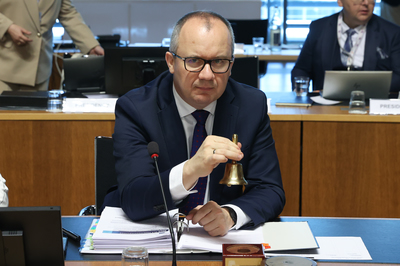
Adam Bodnar, Polish Minister of Justice
The new rules – which still require agreement between the Council and the European Parliament – include a so-called pre-pack mechanism which makes it possible to agree on the sale of the business before the insolvency starts and a creditors’ committee to ensures the involvement of individual creditors who might otherwise not participate in the proceedings, for instance due to limited resources or lack of geographic proximity.
The Council agreed on key aspects of a draft law that will guarantee the rights of adults who need protection or support in cross-border situations. The new law is designed to enhance the protection of adults who, owing to an impairment or insufficiency of their personal faculties, are unable to protect their own interests. The number of people in need of help when it comes to making decisions related to personal aspects of their life is going up. According to EU figures, the proportion of people older than 65 with one form of disability or another is projected to increase by 77% by 2050.
The new law deals with:
The rules determining the court(s) of which country has the competence to hear a case and the law of which country a court must apply
The automatic recognition by member states of measures taken by a court in another member state
Ensuring authentic instruments (for instance a notarial act) have the same full and complete evidentiary effect in other member states as they do in their member state of origin
Russia’s war of aggression against Ukraine: fight against impunity
Ministers received an update about how member states and the EU are assisting Ukraine in its fight against impunity regarding crimes committed in connection with Russia’s war of aggression. Such notable actions – among many others – are the establishment of a joint investigation team (JIT). This JIT comprises judicial authorities from a number of countries and supports Ukraine with investigations and prosecutions of core international crimes. The Core International Crimes Evidence Database (CICED), set up by Eurojust, an EU agency, preserves, stores and analyses evidence of international crimes in support of national and international investigations.
A more recent development was that representatives of 35 countries, the Council of Europe and the EU Commission, met in Lviv (Ukraine) on 9 May where they agreed to proceed with creating a Special Tribunal for the crime of aggression against Ukraine.
Fight against drug trafficking and organised crime
The presidency informed ministers about the progress that has been made in strengthening judicial cooperation with third countries. The Council considers such cooperation to be essential in the EU’s fight against organised crime to facilitate prosecutions, bring members of criminal networks to justice and dismantle organised crime networks.
In their conclusions from June 2024 the Council agreed on a toolkit to support this effort. This contains measures such:
the organisation of exchanges of experience and best practices between member states experts regarding judicial cooperation with third countries
the secondment, in selected cases, by Eurojust of liaison magistrates in third countries
the encouragement that third countries join the Council of Europe conventions, in particular the Conventions on extradition and on mutual legal assistance
The presidency informed justice ministers on the state of play regarding the EU’s accession to the European Convention for the Protection of Human Rights and Fundamental Freedoms (ECHR). The accession of the EU to the ECHR is a EU treaty obligation.
Justice ministers were updated about the activities of the EPPO. The European Chief Prosecutor, Laura Kövesi, informed on the latest EPPO developments. In 2024 Poland and Sweden joined the EPPO which brought its membership to 24 Member States.
The presidency also kept ministers informed about the ongoing process of selecting a new European Chief Prosecutor, as Ms. Kövesi’s term will end on 30 October 2026, as well as seven new European prosecutors.
The presidency debriefed ministers about the ministerial meeting between the United States and the EU on justice and home affairs which took place on 2 and 3 June in Warsaw and on the state of play regarding possible EU actions related to the retention of electronic communication data. The Commission informed about the negotiations between the US and EU on an e-evidence agreement.
Lithuania took the floor on an initiative to bolster EU democratic resilience and resist historical revisionism. Slovenia provided information on the sanctions taken by the United States against judges of the International Criminal Court. Denmark finally presented its workplan for its presidency which will start on 1 July 2025.