We use cookies to improve your browsing experience. Necessary cookies are required to support essential features of the Council's website. Optional cookies help us produce anonymous and aggregated statistical reports to better serve your needs.
With your permission, we will use cookies to produce aggregated, anonymous data about our visitors' browsing and behaviour on our website. We will use this data to improve your experience on our website.
Competitiveness Council (Internal market and industry), 22 May 2025
Main results
Public interface for declaration of posting of workers
Ministers approved the Council’s position (general approach) on the Regulation for the e-declaration of posted workers. A 'posted worker' is a worker sent by their employer to provide a service in another member state on a temporary basis. The regulation aims to reduce the administrative burden for businesses via the submission of posting declarations through a new voluntary on-line interface that would enable the registration of posted workers in a user-friendly way, at a distance and by electronic means.
Vast majority of the delegations supported the general approach, underlined the benefits that e-declaration can bring in terms of administrative simplification, integration of the single market, freedom of movement, and protection of worker’s rights. Many ministers recalled the voluntary nature of the system and the need to keep a high level of control by national authorities.
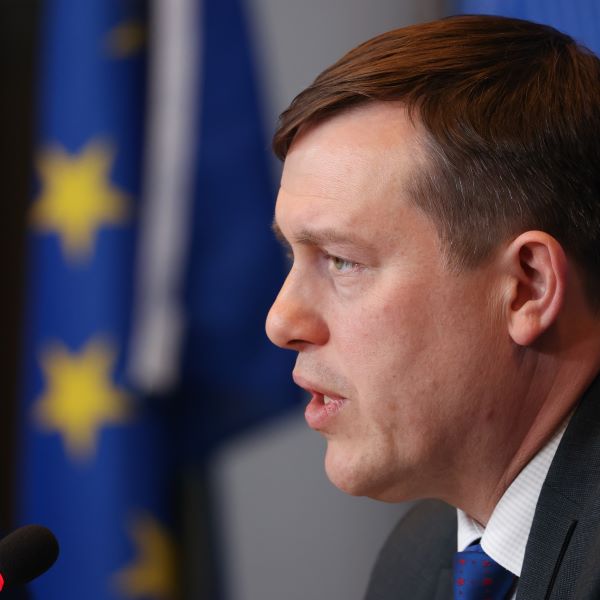
The public interface for posted workers is a game changer in the internal market for services. Using advanced digital technologies and sending employees to another member state will be faster, cheaper and easier; workers will continue to enjoy their rights, and the single market for services will be closer to completion.
Michał Baranowski, Undersecretary of State in the Ministry of Economic Development and Technology
Ministers held a policy debate on how to make tailor-made industrial policies for traditionally strong industries (TSI). The competitiveness compass proposed several sector-specific flagship initiatives for important industries, such as the steel and metals action plan, presented on 19 March 2025, and the industrial action plan for the automotive sector, presented on 5 March 2025. A chemicals industry package is scheduled for 2025.
Ministers exchanged views on how to boost the competitiveness of TSIs while still working on the climate goals. Many ministers stressed the need to keep a pragmatic approach, lower energy prices and improve interconnection infrastructure, ensure security of supply of raw materials, boost technological development and ensure financing for industry. Many delegations underlined the importance of ensuring demand of low-carbon products in public procurement, called for the simplification of legislation and reduction of administrative burden, and fight unfair competition and carbon leakage with the effective use of trade defence tools and the use of the carbon border adjustment mechanism (CBAM).
The Commission’s executive vice-president for prosperity and industrial strategy, Stéphane Séjourné, presented the Single Market Strategy, which the college of commissioners adopted the day before. The Strategy targets the 'Terrible Ten,' which are the most significant obstacles in ten sectors preventing EU businesses from expanding across member states. It emphasizes the need for greater ambition in services, simplification, and digitalization, particularly for SMEs, and calls for more political involvement through the appointment of an Internal Market ‘sherpa’ from each member state.
Member states welcomed the strategy. Many delegations showed their willingness to cooperate in the implementation of the strategy. Ministers underlined their different priorities in the strategy, including support for SMEs, reduction of administrative burden, increase of the interconnections of energy, transport and data, digitalization of procedures, and the reduction of territorial supply constraints.
Public procurement: strategic goals and way forward
Ministers held a debate on the role of public procurement as a strategic instrument with annual budget of €2.3 trillion and with 250 000 public, regional, and local authorities as its stakeholders. The Polish presidency had drawn up a note to guide the discussion. The ensuing debate was guided by two questions which the Presidency has put to Ministers. One concerns the way forward towards achieving the multiple and rapidly evolving strategic goals of the EU, such as competition, sustainability, resilience, innovation, security, safety, and competitiveness through public procurement. The other question aimed to assess the views among Member States about the level of flexibility for the national authorities to decide which objectives to pursue and how.
Ministers shared their views on the expected revision of the EU public procurement legislation, with a variety of opinions expressed. All delegations and the Commission emphasized the need to simplify the existing European framework by reducing the number of legal acts, introducing digital tools, and establishing clearer rules. The ministers also discussed which strategic objectives of the EU —such as environmental goals, social policies, economic sovereignty, and national security—public procurement could help to achieve, and debated whether and when an EU preference clause might be introduced. Many delegations advocated for allowing national, regional, and local contracting authorities to have the flexibility to tailor the application of the new sectoral criteria, including the EU preference, to their specific needs. They expressed a strong signal for the revision to concentrate on the simplification of the procurement procedures at EU level, or the ‘how to buy’, while giving choice to the contracting authorities to decide on ‘what to buy’.
Council as a red tape filter
Ministers held a second policy debate on how to improve the legislative process to make it more business friendly. In its conclusions of 20 March 2025, the European Council emphasised the need to simplify and drastically reduce administrative, regulatory and reporting burdens, as a matter of urgency. The conclusions called for streamlined EU legislation that fosters a clear, simple and innovation-friendly regulatory framework. Ensuring that EU regulations are fit for competitiveness is the first horizontal enabler identified in the competitiveness compass, presented in January 2025. Ministers shared their views on two issues: how the Council can implement its own better regulation principles, and how the Council can effectively act as a ‘red tape filter’ by fostering a business-friendly regulatory environment.
All ministers agreed that improving regulation and simplifying processes should be a priority for all European institutions: the Commission, Parliament, and Council. Many delegations suggested solutions to improve the legislative process, such as conducting broad consultations with stakeholders, performing thorough impact assessments (including for major amendments), and evaluating the effects of legislation, especially on small and medium-sized businesses. Some delegations called for applying principles like proportionality, subsidiarity, and the "one-in-one-out" rule (which removes existing legislation when proposing new laws) to ensure new legal acts are effective and not overly burdensome. The presidency confirmed that better regulation will remain a priority for the troika.
Other business
Under any other business, ministers were informed on these issues:
The Polish presidency updated ministers on the state of play of legislative proposals dealt with during the presidency:
the Regulation on combating late payment in commercial transactions
the Directive on European cross-border associations
the Regulation on compulsory licensing for crisis management
the Regulation on the safety of toys
the Regulation on detergents and surfactants
The Czech, French, German, Hungarian, Italian, Latvian, Portuguese, Slovak and Spanish delegations reminded ministers of the need to continue discussions on the regulation of standard essential patents (SEP)
The French delegation made an information point on the swift implementation of the action plan for the European automotive industry, including support for the European battery value chain
The French delegation made a second information point on the mobilising funding for industry and the EU’s strategic autonomy, at European and national level
France also had a third information point on the increase of customs duties by the US authorities, measures to protect the EU market from overcapacity flows
The Danish delegation informed ministers about the work programme of the incoming presidency in the fields of the internal market and industry.
The Council also adopted without discussion the items on the lists of non-legislative A items.