We use cookies to improve your browsing experience. Necessary cookies are required to support essential features of the Council's website. Optional cookies help us produce anonymous and aggregated statistical reports to better serve your needs.
With your permission, we will use cookies to produce aggregated, anonymous data about our visitors' browsing and behaviour on our website. We will use this data to improve your experience on our website.
Employment, Social Policy, Health and Consumer Affairs Council
Employment, Social Policy, Health and Consumer Affairs Council, 6-7 December 2021
Main results
Employment and social affairs (Monday 6 December)
The Council reached a general approach both on a draft EU law on minimum wages and on a proposed directive on pay transparency. It also adopted conclusions on sustainable work over the life course and on the impact of AI on gender equality in the labour market.
Minimum wages
The Council today agreed its position on a Commission proposal for an EU law on adequate minimum wages in the EU. In order to improve people's working and living conditions, this draft law establishes a framework to promote adequate levels of statutory minimum wages, to promote collective bargaining on wage setting and to improve the effective access to minimum wage protection of those workers who are entitled to a minimum wage.
Because countries with a high collective bargaining coverage tend to have a smaller share of low-wage workers and higher minimum wages than those with low collective bargaining coverage ministers agreed that countries should promote strengthening the capacity of social partners to engage in collective bargaining.
This so-called general approach reached today provides the Council presidency with a mandate for negotiations with the European Parliament (who agreed on its position in late November).
Work should pay. We cannot accept that people who put all their energy in their job, still live in poverty and cannot afford a decent standard of living. This law will be a great step forward towards this goal.
Janez Cigler Kralj, Slovenian minister of labour, family, social affairs and equal opportunities
The Council also agreed its position on a draft law on pay transparency which will help to close the gender pay gap. The proposed law aims to empower workers to enforce their right to equal pay for equal work or work of equal value between men and women through a set of binding measures on pay transparency. Measures to improve pay transparency include:
employers need to indicate the initial pay level or range to be paid to the future worker
employers have to make accessible for their employees which - objective and gender-neutral - criteria are used to define their pay and career progression
workers and their representatives have the right to receive information on their individual pay level and the average pay levels for workers doing the same work or work of equal value, broken down by sex
Once the European Parliament (EP) has adopted its final position, the Council and the EP will negotiate a common text.
There is simply no justification that women still earn much less than their male peers. With the agreement reached today in Council, the EU is taking a big step towards tackling pay discrimination and closing the gender pay gap.
Janez Cigler Kralj, Slovenian minister of labour, family, social affairs and equal opportunities
Europe's working-age population is shrinking and this generates risks of labour shortages and challenges to our social protection systems. Therefore our work needs to become more sustainable, through living and working conditions that allow people to engage and remain in work throughout an extended working life. This can be achieved by investing in quality jobs, fair working conditions, occupational health and safety, and up-skilling and re-skilling. Ministers approved conclusions on sustainable work over the life course. They call on member states - among other things - to take into account the new EU Strategic Framework on Health and Safety at Work 2021-2027 and to strengthen policies to supporting people to enter and re-enter the labour market quickly.
We need action to counter the trend that with people getting older we will end up with shortages in the labour market. That is why we need to strive to make work more sustainable. This would help keeping people on the labour market, increase our economic performance and boost social inclusion.
Janez Cigler Kralj, Slovenian minister of labour, family, social affairs and equal opportunities
Investing in occupational safety and health also has an economic benefit as work-related injuries and diseases cost society the equivalent of more than 3.3 % of GDP.
The impact of AI on gender equality in the labour market
Artificial intelligence (AI) can have a different impact on women as compared to men. Artificial intelligence can for instance lead to gender biases in recruitment and to the perpetuation of stereotypes. That is why adopting a gender perspective regarding its consequences for the labour market is important. In its conclusions on the impact of AI on gender equality in the labour market, the Council is calling upon member states to (among other things):
take concrete steps to improve awareness of gender equality issues in AI research and in all sectors where AI is designed, developed and used
to ensure that when AI is used for the management of human resources, it promotes transparency and gender equality, particularly in the areas of pay, training, access to promotion, and career progression
to ensure algorithmic transparency and to address the problem of historically biased input data in the use of AI
Equal treatment, European Semester and Towards Europe of Equality
The presidency presented a progress report to the Council on a draft directive on equal treatment, a proposal from 2008 to extend the protection against discrimination on the grounds of religion or belief, disability, age or sexual orientation to areas outside employment.
Ministers also held a policy debate about the European Semester 2022, after which the Commission presented a number of surveys, reports and recommendations related to the yearly European Semester exercise, in particular the 2022 annual sustainable growth survey alert mechanism report, the draft joint employment report and the draft recommendations on the economic policy of the euro area.
Ministers also endorsed the key messages of the review by the Employment Committee under the Youth Guarantee. The Youth Guarantee is a commitment of all EU member states to guarantee that all young people under the age of 30 receive a good quality offer of employment, continued education, apprenticeship or traineeship.
The chair of the Social Protection Committee finally updated ministers on the national plans under the Council recommendation on access to social protection for workers and the self-employed. The Employment Committee and Social Protection Committee are preparatory bodies for the employment and social policy Council.
The Council adopted an implementing regulation implementing Regulation (EU) No 208/2014 concerning restrictive measures directed against certain persons, entities and bodies in view of the situation in Ukraine, thereby delisting one individual.
The presidency also provided information on the state of play of a number of legislative proposals: a regulation on the coordination of social security systems, a directive on carcinogens and mutagens at work and a directive on gender balance on company boards.
The European Commission also informed delegations on its ALMA initiative, a cross-border youth mobility scheme for disadvantaged young people aged 18-30 who are not in employment, education or training, and gave an update on the High Level Group on the future of social protection and the welfare state.
Additional "other business" points included information from the Slovene delegation on its presidency conferences as well as information from the French delegation on the work programme of the incoming presidency.
Health (Tuesday 7 December)
Ministers exchanged views on current and future responses to the COVID-19 pandemic and approved conclusions on strengthening the European Health Union.
COVID-19
In light of an epidemiological situation in the EU of high or very high concern and the detection of the Omicron variant, ministers exchanged views on the current COVID-19 situation. In particular they addressed measures to contain the spread of the Omicron variant, allowing additional knowledge to be gained, the need of a common approach to the validity of COVID-19 vaccination certificates in view of the administration of booster doses, the roll-out of vaccines boosters, adult and paediatric vaccinations and the procurement of COVID-19 therapeutics.
Ministers flagged the importance of continuing to cooperate and share views on fighting COVID-19 and to continue the discussion on vaccination in general, booster shots and vaccinating children. Many highlighted the importance of fighting vaccination hesitation as vaccination is the best way to protect EU citizens.
Some countries also highlighted the need to step up testing and sequencing, especially in view of Omicron and possible new variants. Joint procurement of therapeutics at EU level was also welcomed by many member states.
The surge in infections, overstrained hospitals and now the detection of a possibly more infectious new variant require determined and coordinated action. Continued vaccinations, booster shots, the availability of therapeutics and coordination of the vaccination certificate will help get us through this difficult moment of the pandemic.
Janez Poklukar, Slovenian Minister of Health
The COVID-19 pandemic has stressed the need for the EU and its member states to be prepared for health emergencies and to better coordinate when faced with a cross-border health crisis.
In its conclusions on strengthening the European Health Union, which ministers approved today, the Council highlights the need for strategic investments in health systems and better collaboration internally and with other countries. Although European health systems, under the enormous pressure of the COVID-19 pandemic, have demonstrated their capacity to innovate, the EU nevertheless wants to draw on lessons learnt during the crisis and create better conditions for responding to future challenges (such as rising antimicrobial resistance). The conclusions highlight four main areas as priorities for the strengthening of the European Health Union: innovative solutions for resilient health systems, accessibility to and availability of medicinal products and medical devices, global health as well as beating cancer.
The presidency also updated ministers about its successful conclusion of the negotiations on two legislative proposals to build this European Health Union:
a reinforced role for the European Medicines Agency in crisis preparedness and management for medicinal products and medical devices
an updated mandate for the ECDC to strengthen the ECDC's work in the areas of surveillance, early warning, preparedness and response
Even if we are facing a grave situation when it comes to COVID-19 we need to look ahead. The time is now to prepare for the future and to make sure we are better prepared. Our recent achievements to boost the capacity of the European Medicines Agency and the European Centre for Disease Prevention and Control will be instrumental in this respect.
Janez Poklukar, Slovenian Minister of Health
Emergency framework regarding medical counter measures
On 16 September 2021, the European Commission launched a European Health Emergency preparedness and Response Authority (HERA). HERA is expected to ensure the development, production and distribution of medicines, vaccines and other medical countermeasures (e.g. gloves and masks). HERA is being complemented by a proposed Council regulation on the emergency framework regarding medical countermeasures. It will among other things put in place a framework for ensuring the availability of crisis-relevant medical countermeasures in the event of a public health emergency, supply chain monitoring and emergency funding.
In the run up to the EPSCO Council, the presidency held numerous meetings about the draft law at technical level and presented several compromise proposals. In their exchange of views, many ministers referred to the learnings from the ongoing pandemic and the need to respond quickly and collectively to protect EU citizens. The joint procurement of COVID-19 vaccines was praised as a success story in this context.
In view of concluding the discussions on the proposed Council regulation, delegations highlighted:
the need for joint response capabilities at EU level to ensure that sufficient, safe, effective and affordable medical countermeasures are available as swiftly as possible in a public health crisis
the importance of cooperation with authorities outside of the EU as a successful health threat response cannot be limited to EU action
the role of EU autonomy in medical countermeasure procurement and the involvement of production facilities, knowledge and resources from across the EU
an appropriate role for member states in the governance of HERA and the relevance to have workable structures
In addition to its updates on the conclusion of the negotiations of the extended EMA and ECDC mandates, the presidency updated ministers on the state of play of a regulation on serious cross-border threats to health and on in vitro diagnostic medical devices.
The Commission also informed ministers about a report on the implementation of a regulation concerning biocidal products and the pharmaceutical strategy for Europe. Both the presidency and the Commission updated delegates on Europe's Beating Cancer Plan, the special session of the World Health Assembly on pandemic preparedness and response and the WHO Framework Convention on Tobacco control ninth session of the Conference of the Parties.
The French delegation informed about the work programme of the incoming presidency.
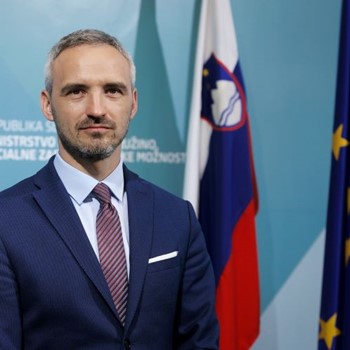 Work should pay. We cannot accept that people who put all their energy in their job, still live in poverty and cannot afford a decent standard of living. This law will be a great step forward towards this goal.
 The surge in infections, overstrained hospitals and now the detection of a possibly more infectious new variant require determined and coordinated action. Continued vaccinations, booster shots, the availability of therapeutics and coordination of the vaccination certificate will help get us through this difficult moment of the pandemic.
