Belarus
The EU stands in support of the Belarusian people. It condemns human rights abuses in Belarus, Belarus' hybrid attacks against the EU and its involvement in Russia's war of aggression against Ukraine.
2020 fraudulent elections and human rights abuses
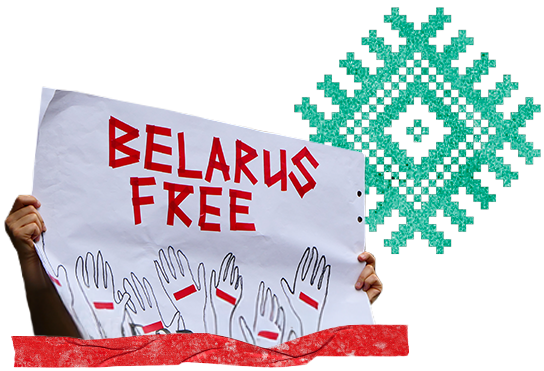
The EU does not recognise the results of Belarus' presidential elections of 8 August 2020 and condemns them as neither free nor fair. It considers that Aliaksandr Lukashenka lacks any democratic legitimacy.
On several occasions between 2020 and 2025, the Council has expressed its concern over human rights abuses in Belarus and reiterated its support for the democratic right of the Belarusian people to elect their president through new free and fair elections, without external interference.
The EU’s policy towards Belarus is guided by the Council conclusions of 19 February 2024, in which the EU reaffirmed its unwavering support for the Belarusian people’s quest for a free, democratic, sovereign and independent Belarus as part of a peaceful and prosperous Europe.
The EU is deeply concerned about:
- the deteriorating human rights situation in Belarus
- the continuing persecution and intimidation campaigns against all segments of Belarusian society
- the unprecedented level of repression and the restrictions on political participation
- actions affecting the national identity of Belarus
In response to Belarus’ actions, the EU has imposed sanctions against Belarus. The aim is to put pressure on the Belarusian political leadership to prevent further violence and repression, release all political prisoners and other unjustly detained people, and initiate a genuine and inclusive national dialogue with society at large.
Involvement in Russia’s war against Ukraine
As of 24 February 2022, the Lukashenka regime has been an accomplice in Russia’s war of aggression against Ukraine.
The EU strongly condemns the continued support provided by the Lukashenka regime to Russia's military aggression against Ukraine and calls on Belarus to refrain from such actions and to respect its international obligations.
Belarus is contributing to the war of aggression against Ukraine in various ways, including by:
- allowing Russia to fire ballistic missiles from Belarusian territory
- enabling transportation of Russian military personnel and heavy weapons, tanks, and military transporters
- allowing Russian military aircraft to fly through Belarusian airspace into Ukraine
- providing refuelling points
- storing Russian weapons and military equipment in Belarus
In response to Belarus' actions, since March 2022 the EU has adopted a number of individual and economic measures mirroring the sanctions adopted against Russia.
Hybrid attacks against the EU
Airspace violations
The EU condemns Belarus' intensified hybrid attacks against the EU and its member states and the violations of EU airspace in 2025. These incursions pose serious security and safety risks, primarily to civilian aviation, and aim to destabilise an EU member state and to intimidate European citizens.
These attacks are being carried out in the context of a broader targeted hybrid campaign, along with other actions that include state-sponsored migrant smuggling. The EU calls on the Belarusian regime to immediately stop all these actions.
Instrumentalisation of migrants for political purposes
Following the political upheaval in Belarus and the restrictive measures adopted by the EU, in June 2021 Belarus started to organise flights and internal transport to facilitate the transit of migrants to the EU, first to Lithuania and then to Latvia and Poland. The EU condemns all attempts by third countries to instrumentalise human beings for political purposes.
In the following years and especially after the full-scale Russian invasion of Ukraine, the migratory pressure on the eastern border has remained high. However, the number of irregular border crossings is relatively low.
To respond to Belarus’ hybrid campaign against the EU, the Council widened the scope of sanctions against Belarus in light of the instrumentalisation of migrants (November 2021) and of the airspace violations in Lithuania and other hybrid activities affecting EU member states (in December 2025).
Support to the people of Belarus
Once Belarus embarks on a democratic transition, the EU will provide both immediate and long-term support to help the country stabilise its economy, reform its institutions and bring benefits to its citizens and society.
To facilitate effective economic reforms, boost resilience, enhance growth potential, and foster job creation, the EU is prepared to mobilise an investment package of up to €3 billion for Belarus.
The comprehensive plan of economic support to democratic Belarus will be implemented through a broad range of political and financial instruments. These instruments will re-enforce the support programmes from international financial institutions, particularly the European Investment Bank and European Bank for Reconstruction and Development. The EU expects that the International Monetary Fund and World Bank would also step up support for the country once a democratic transition has taken place in Belarus.
Since August 2020, the EU has increased its financial support for the Belarusian people. EU financial assistance is benefitting citizens directly by reinforcing civic initiatives and independent media, facilitating mobility and scholarships and supporting SMEs and the health and cultural sectors.
Following a review of EU-Belarus relations, and in light of the complicit role of the Belarusian regime in Russia’s war of aggression against Ukraine, the EU has re-oriented its assistance towards non-state actors, providing substantial support to the people of Belarus in six key sectors: civil society, human rights, independent media, education, culture, and SMEs in exile.
Since 2020, the EU’s financial assistance to the people of Belarus amounted to €200 million through the Neighbourhood, Development and International Cooperation Instrument (NDICI).
Sanctions against the Belarusian regime
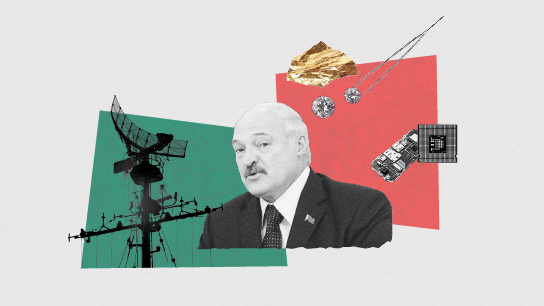
The EU has imposed extensive sanctions against Belarus in response to the:
- 2020 fraudulent elections and the continued human rights abuses perpetrated by the Belarusian authorities
- Belarusian regime's involvement in Russia’s military aggression against Ukraine
- hybrid attacks against the EU, including the instrumentalisation of migrants for political purposes and airspace violations
EU sanctions against Belarus
Suspension of Eastern Partnership participation
Between 2014 and 2020 - before the August 2020 fraudulent elections - relations between the EU and Belarus improved slightly.
In February 2016, the Council acknowledged the steps taken by Belarus to improve EU-Belarus relations and decided to lift some of the existing sanctions against Belarus.
In 2016, the EU-Belarus human rights dialogue was resumed and Belarus adopted a human rights action plan for 2016-2019. Negotiations on a mobility partnership were concluded in 2017, and visa facilitation and readmission agreements entered into force on 1 July 2020.
However, this period of improved relations was halted due to a drastic deterioration in the overall human rights, democracy and rule of law situation in Belarus in the run-up, conduct and aftermath of the August 2020 elections.
Due to the brutal crackdown on peaceful protesters and the continued human rights abuses that followed the presidential elections, the EU scaled down bilateral cooperation with the Belarusian authorities and imposed a series of sanctions against Belarus.
In June 2021, Belarus announced its withdrawal from the Eastern Partnership and the suspension of the readmission agreement with the EU, as well as other existing structures in place such as the EU-Belarus human rights dialogue.
The EU suspended the visa facilitation agreement with Belarus in November 2021.
See also

Protection and promotion of human rights

Russia's war against Ukraine

Hybrid threats
Last review: 21 January 2026
