EU sanctions against Belarus
The EU has imposed extensive sanctions against Belarus in response to human rights abuses, Belarus' support for Russia's war against Ukraine, and its hybrid attacks against the EU.
Human rights abuses in Belarus
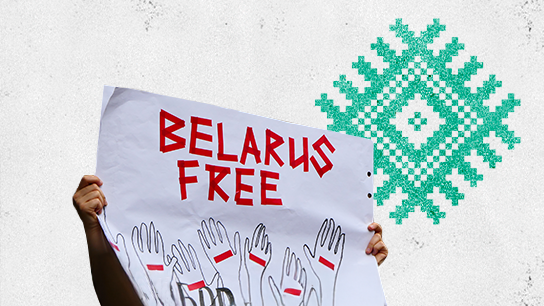
The EU has adopted massive sanctions in light of the fraudulent presidential elections that took place in August 2020 and the brutal crackdown by Belarusian security forces on the peaceful protesters, opposition members and journalists.
The purpose of these sanctions is to put pressure on the Belarusian political leadership to prevent further violence and repression, release all political prisoners and other unjustly detained people, and initiate a genuine and inclusive national dialogue with society at large.
Sanctions target individuals and entities responsible for repression and intimidation against peaceful protestors, opposition members and journalists, as well as for misconduct of the electoral process, torture of detainees and other human rights abuses.
These measures were last extended until 28 February 2027. Currently 310 individuals and 46 entities are sanctioned under this regime.
The list of individuals sanctioned includes:
- Aliaksandr Lukashenka, President of Belarus
- Viktor Lukashenka, national security advisor and son of President Lukashenka
- regime propagandists and high-ranking officials
- the chair of the Council of the Republic of the National Assembly of Belarus
- the prosecutor general and other members of the judiciary
- business people benefiting from and supporting the Belarusian regime
- heads and deputy heads of various correctional institutions
- those involved in the forced and unlawful landing of a Ryanair flight in Minsk
The list of entities sanctioned includes:
- propaganda outlets, the state television and radio broadcasting company Belteleradio
- companies benefiting from and supporting the Belarusian regime, including in the military, technology and agriculture sector
- companies facilitating the circumvention of sanctions
- transport companies, tour operators and hotels that have supported illegal border crossings through Belarus to the EU
- the Supreme Court
- the State Control Committee
- the Central Election Commission
- the President Property Management Directorate
The sanctions include:

Travel ban
Targeted persons cannot enter or transit through EU territories.

Asset freeze
All the assets of sanctioned individuals and entities in the EU are frozen.

Unavailability of funds
EU persons and entities cannot make any funds available to those sanctioned.
Between 2021 and 2025, the Council broadened the scope of the sanctions regime against Belarus to include individuals and entities involved in Russia's war of aggression against Ukraine and in hybrid attacks against EU countries.
In addition, on 4 June 2021, the EU imposed a ban on the overflight of EU airspace and on access to EU airports by Belarusian carriers of all kinds, following the unlawful forced landing of a Ryanair flight in Minsk on 23 May 2021.
- Decision on restrictive measures against Belarus and its involvement in the Russian aggression against Ukraine (EU official journal)
- Regulation on restrictive measures against Belarus and its involvement in the Russian aggression against Ukraine (EU official journal)
- 2020 fraudulent elections and human rights abuses in Belarus
Military support for Russia
In response to the continued support provided by the Lukashenka regime to Russia's military aggression against Ukraine, the EU has adopted a number of individual and economic measures, mostly under the Belarus sanctions regime. These measures mirror the sanctions adopted against Russia.
Individual measures target those supporting Russia's war against Ukraine and include travel bans for individuals, an asset freeze for individuals and entities and a prohibition on making funds or economic resources available to those listed.
Economic sanctions target Belarus' financial, trade, energy, transport, technology and defence sectors, as well as services provided to Russia or to Russian nationals. They largely mirror the measures adopted against Russia and include:

Finance
- a ban on transactions with the Central Bank of Belarus
- a ban on transactions with another four Belarusian banks
- a ban on the provision of euro-denominated banknotes to Belarus
- limits on financial inflows from Belarus to the EU
Defence and technology
- a ban on the export of firearms, ammunition and dual-use goods to Belarus
- a ban on the export of defence goods and technology to Belarus
- an arms embargo
Transport
- a ban on the export of aviation, maritime and space goods and technology to Belarus
- a ban on Belarusian road transport operators entering the EU
- a ban on the transportation of goods by road within EU territory

Services
- a ban on providing accounting, auditing and tax consulting services
- a ban on providing architectural, engineering, IT and legal advisory services
- a ban on providing advertising, market research and public opinion services
Trade in raw materials and other goods
- a ban on the export of luxury goods to Belarus
- a ban on the import of gold, diamonds, helium, coal and mineral products from Belarus
- a ban on the import of potash, wood, cement, iron, steel and rubber products from Belarus
Anti-circumvention measures
- a requirement for EU exporters to insert the so-called 'no-Belarus clause' into their contracts
- a requirement for EU operators to implement due diligence mechanisms
- a ban on the transit of dual-use goods and technologies via the territory of Belarus
- Decision on restrictive measures against Belarus and its involvement in the Russian aggression against Ukraine (EU official journal)
- Regulation on restrictive measures against Belarus and its involvement in the Russian aggression against Ukraine (EU official journal)
- Belarus’ involvement in Russia’s war against Ukraine
Tariffs on agricultural products and fertilisers
On 12 June 2025, the Council adopted a regulation that introduces tariffs on agricultural products and fertilisers from Russia and Belarus that were not yet subject to extra customs duties.
The tariffs are expected to reduce Russian and Belarusian export revenues, thereby limiting Belarus' ability to support Russia's war of aggression against Ukraine. They have applied since 1 July 2025.
Sanctions in response to Belarus' hybrid attacks
To respond to Belarus hybrid campaign against the EU, the Council widened the scope of sanctions against Belarus in light of the instrumentalisation of migrants (November 2021) and of the airspace violations in Lithuania and other hybrid activities affecting EU member states (in December 2025).
The criteria added allow the EU to impose sanctions against those responsible for or involved in:
- instrumentalisation of migrants for political purposes
- foreign information manipulation and interference (FIMI)
- actions targeted at the functioning of democratic institutions, economic activities or services of public interest of the EU and its member states
- actions facilitating or enabling disruption of the functioning of critical infrastructure
Those sanctioned are subject to a travel ban and an asset freeze. EU citizens and companies are prohibited from making funds available to them.
- Belarus: Council broadens scope of sanctions regime to cover hybrid activities against EU member states (press release, 15 December 2025)
- Belarus: EU broadens scope for sanctions to tackle hybrid attacks and instrumentalisation of migrants (press release, 15 November 2021)
- Belarus’ hybrid attacks against the EU
Other sanctions against Belarus
In parallel to the sanctions linked to the August 2020 elections, there are also other types of sanctions in place against Belarus.
In 2004, the EU adopted restrictive measures in connection with the unresolved disappearances of two opposition politicians, one businessman and one journalist in 1999 and in 2000. These measures included an asset freeze and a travel ban against four people.
The Council later adopted further restrictive measures against individuals and entities involved in the violation of international electoral standards and international human rights law, as well as in the crackdown on civil society and democratic opposition.
An arms embargo was introduced in 2011.
In February 2016, the Council decided to lift the existing sanctions against the individuals and entities involved in human rights violations, while maintaining the arms embargo and the sanctions against the four people involved in the unresolved disappearances.
This decision was taken while acknowledging the steps taken by Belarus that had contributed to improving EU-Belarus relations, in particular the release of all political prisoners.
However, this period of improved relations was halted following the August 2020 presidential elections and the EU imposed a series of new sanctions against Belarus.
See also
Belarus

Russia's war against Ukraine: EU sanctions

Why the EU adopts sanctions
Last review: 26 February 2026