"Il-cookies jintużaw biex intejbu l-esperjenza ta' navigazzjoni tiegħek. Il-cookies meħtieġa huma neċessarji biex jappoġġaw karatteristiċi essenzjali tas-sit web tal-Kunsill. Il-cookies fakultattivi jgħinuna nipproduċu rapporti statistiċi anonimi u aggregati biex naqdu aħjar il-ħtiġijiet tiegħek.
Bil-permess tiegħek, ser nużaw cookies biex nipproduċu data aggregata anonima dwar in-navigazzjoni u l-imġiba tal-viżitaturi fuq is-sit web tagħna. Ser nużaw din id-data biex intejbu l-esperjenza tiegħek tan-navigazzjoni fuq is-sit web tagħna.
Kunsill Impjiegi, Politika Soċjali, Saħħa u Affarijiet tal-Konsumatur
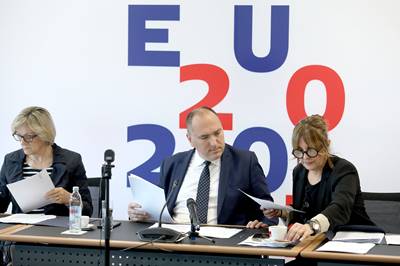
Vidjokonferenza tal-ministri għas-saħħa, 12 ta' Ġunju 2020
Main results
EU4Health programme 2021-2027
EU ministers for health held a first exchange of views on the European Commission's proposal for a regulation establishing the fourth Health programme (EU4Health programme) for the period 2021-2027.
Our discussion today confirmed the main lesson to be drawn from the COVID-19 pandemic - Europe needs to give much higher priority to health. In order to ensure the protection of our citizens, we have to build stronger and more resilient health systems across the EU. We need improved availability of medicines, medical devices, protective equipment and emergency medical teams, better data sharing and stronger cooperation between member states.
Tomislav Dulibić, State Secretary for Health of Croatia
On the basis of a presidency background note, ministers were invited to identify which priorities have to be covered by the programme and which are the most important objectives and actions in view of its implementation. They also shared views on the interaction of the EU4Health programme with other funding instruments and programmes in relation to the next EU budget and the Recovery plan for Europe.
Ministers broadly welcomed the new EU4Health programme and its objectives and stressed that it was important to ensure effective governance and active participation of member states. In relation to this, many delegations mentioned the need to adopt and implement annual working programmes.
Ministers highlighted some particularly important priorities of the new EU4Health programme:
long-term strengthening of health systems, well beyond the current health challenges
ensuring better sharing of data on cross-border health threats
further digitalisation of health systems, including ensuring interoperability between national systems
ensuring availability and affordability of medicines, medical devices and other healthcare products
limiting the dependency of supply chains on third countries
strengthening the prevention and screening for non-communicable diseases, including cancer
protecting people in vulnerable situations, such as the elderly and people suffering from chronic diseases
implementing EU strategies such as "Europe’s Beating Cancer Plan” and the “Pharmaceutical Strategy for Europe”
strengthening the role and functioning of EU agencies, such as the European Center for Disease Prevention and Control (ECDC) and the European Medicines Agency (EMA)
Ministers also stressed the importance of ensuring complementarity and coordination between the EU4Health programme and other EU funding instruments and programmes, such as the Enhanced Union Civil Protection Mechanism (UCPM/rescEU), the European Regional Development Fund (ERDF), the European Social Fund Plus (ESF+), Horizon Europe, the Digital Europe programme (DEP) and the Connecting Europe Facility Programme 2 Digital (CEF Digital). Many delegations expressed the view that it was crucial to ensure that all instruments and programmes in the area of health had similar objectives.
The European Commission presented its vaccines strategy aimed at securing early access for EU citizens to safe and efficient vaccines against COVID-19.
Ministers intervened to highlight the importance of the strategy and called for the full transparency and involvement of member states. In particular, many delegations stressed that it was important to ensure transparency in relation to the negotiations, use of funds and the distribution of safe vaccines, once they are available. Ministers insisted on the importance to ensure that member states were properly and equally represented at all stages of the process, and that they were provided regularly with information from the Commission. Delegations also highlighted that it was crucial to guarantee fair distribution of vaccines among member states.
Għal informazzjoni ġenerali dwar l-akkreditazzjoni, jekk jogħġbok żur din il-paġna.
L-akkreditazzjoni tal-media għas-summits internazzjonali li jsiru barra mill-Unjoni Ewropea ser tiġi ttrattata mill-awtoritajiet governattivi tal-pajjiż ospitanti.
 Our discussion today confirmed the main lesson to be drawn from the COVID-19 pandemic - Europe needs to give much higher priority to health. In order to ensure the protection of our citizens, we have to build stronger and more resilient health systems across the EU. We need improved availability of medicines, medical devices, protective equipment and emergency medical teams, better data sharing and stronger cooperation between member states.